Hanjin Jang, MDEndoscopic Spine Surgery
Menu

Case-Based Education

Five de-identified educational case frameworks

Case pages document diagnosis, clinical presentation, neurologic findings, imaging, procedure details, operative note summaries, postoperative course, and educational points without endorsement or promotional comparison language.

De-identification Notice

All educational cases on this page are de-identified and presented for academic discussion. They are not patient testimonials, treatment guarantees, or advertisements for a particular outcome. Clinical decisions require individualized evaluation by a qualified physician.

Clinical Image Standard

  • Crop out all top, bottom, and side text overlays before publication.
  • Remove or mask patient name, chart number, hospital name, date and time, hospital system identifiers, accession numbers, scan numbers, image sequence numbers, and system labels.
  • Use neutral case-oriented filenames that do not contain names, chart numbers, dates, hospital system text, or patient-related text.
  • Do not use stock images, decorative spine illustrations, or unrelated medical images inside case galleries.
  • Publish only fully de-identified educational images with neutral alt text and case-specific de-identified educational captions.

Case 01

Severe Lumbar Spinal Stenosis Treated With Biportal Endoscopic Decompression

Biportal Decompression for Severe Lumbar Stenosis

Diagnosis
Severe lumbar spinal stenosis with radicular symptoms and objective neurologic deficit.
Procedure
Biportal endoscopic lumbar decompression.
Surgical level
Clinically concordant lumbar stenosis level or levels.
Clinical presentation
The patient presented with persistent leg-dominant symptoms despite medication, physical therapy, and injection treatment. The clinical findings included left-sided sensory disturbance in an L5 dermatome distribution and motor weakness involving ankle dorsiflexion and great toe dorsiflexion.
Neurologic findings
Preoperative neurologic examination demonstrated left ankle dorsiflexion weakness, approximately grade 3, and left great toe dorsiflexion weakness, approximately grade 3. Sensory disturbance was documented in the left L5 dermatome. These findings were reviewed together with imaging before surgical planning.
Conservative treatment summary
The patient had persistent symptoms despite medication, physical therapy, and injection treatment. Surgical treatment was considered because symptoms and neurologic findings persisted and were concordant with the stenotic level.
Imaging summary
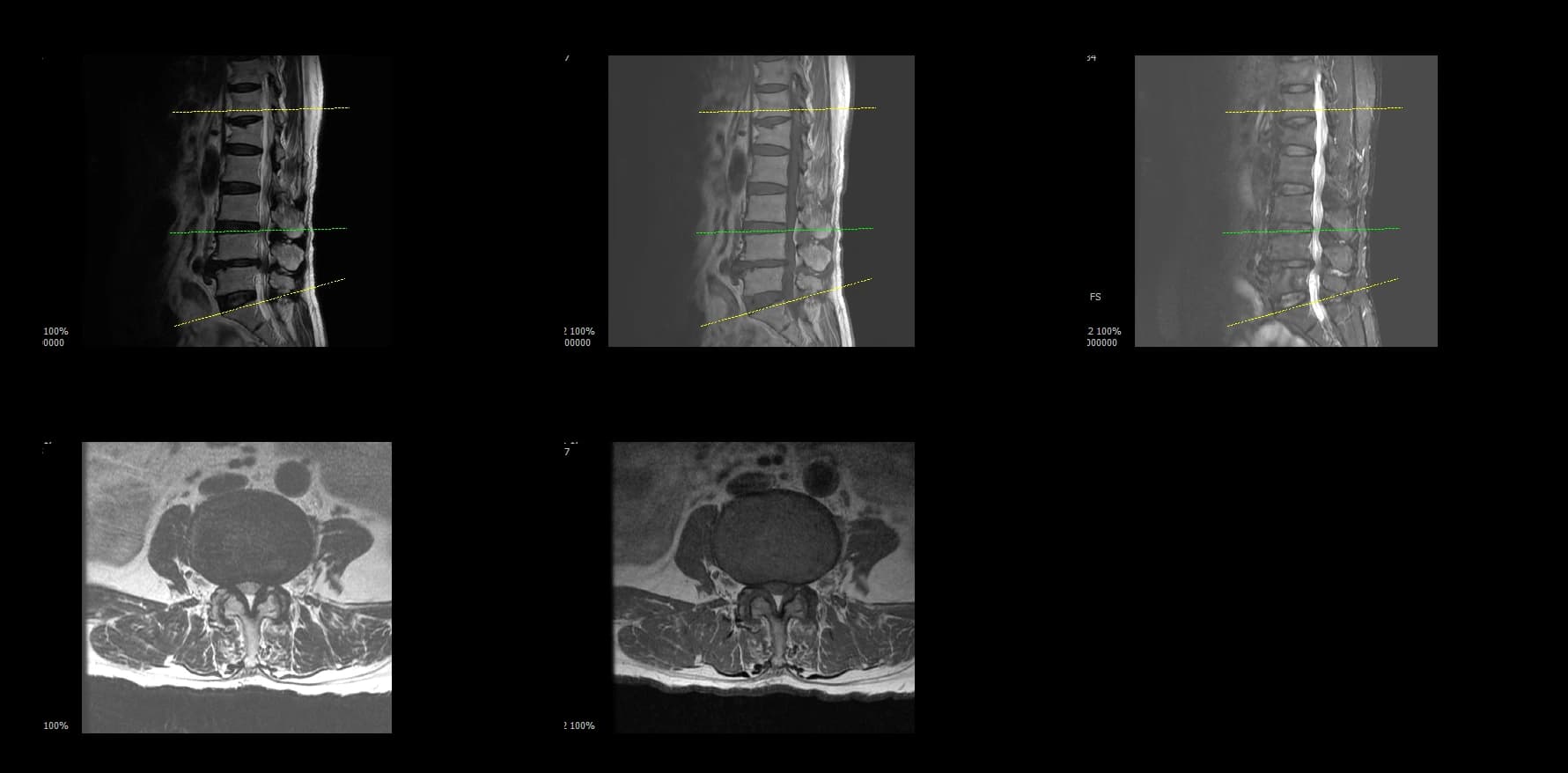
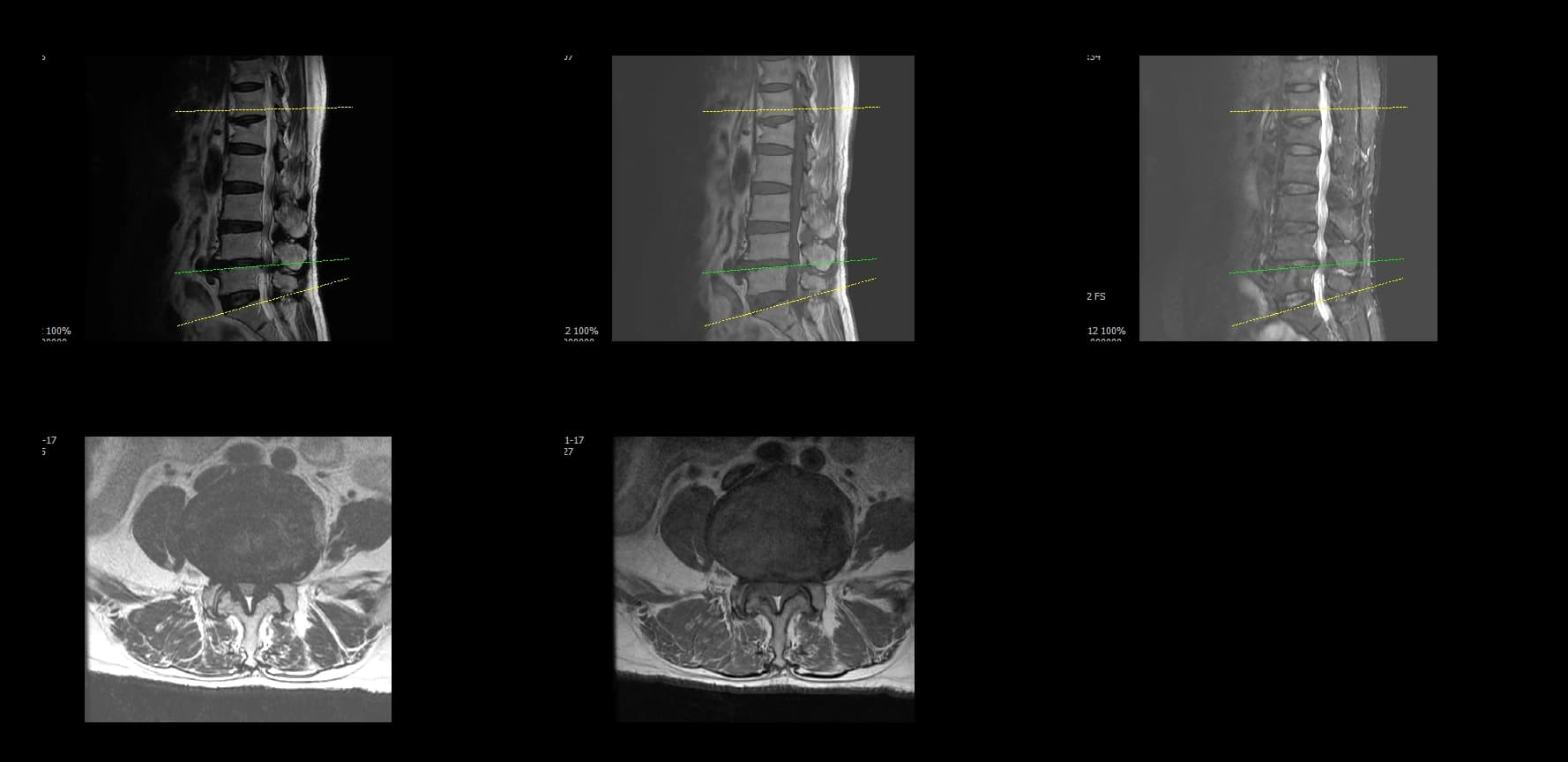
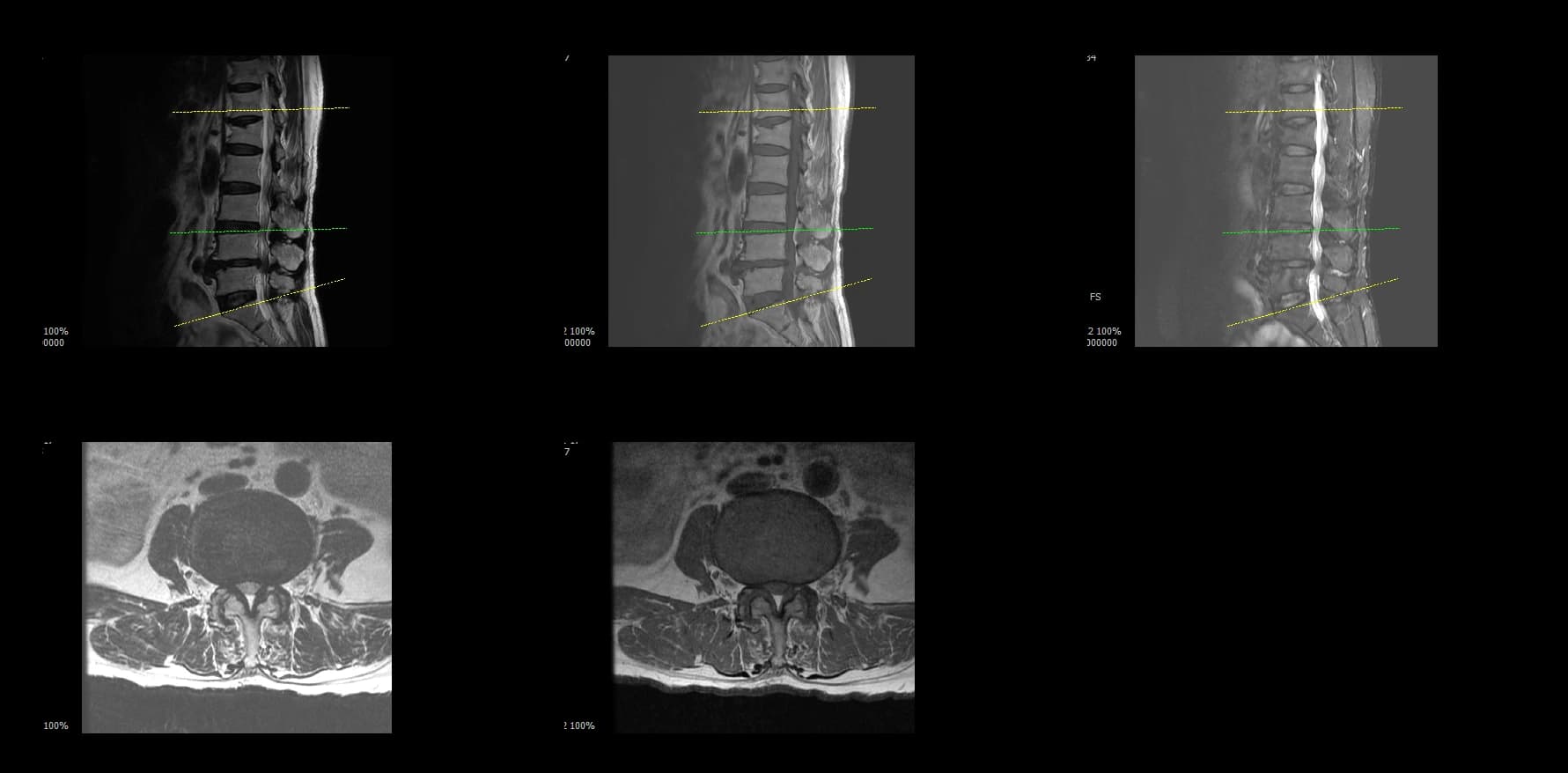
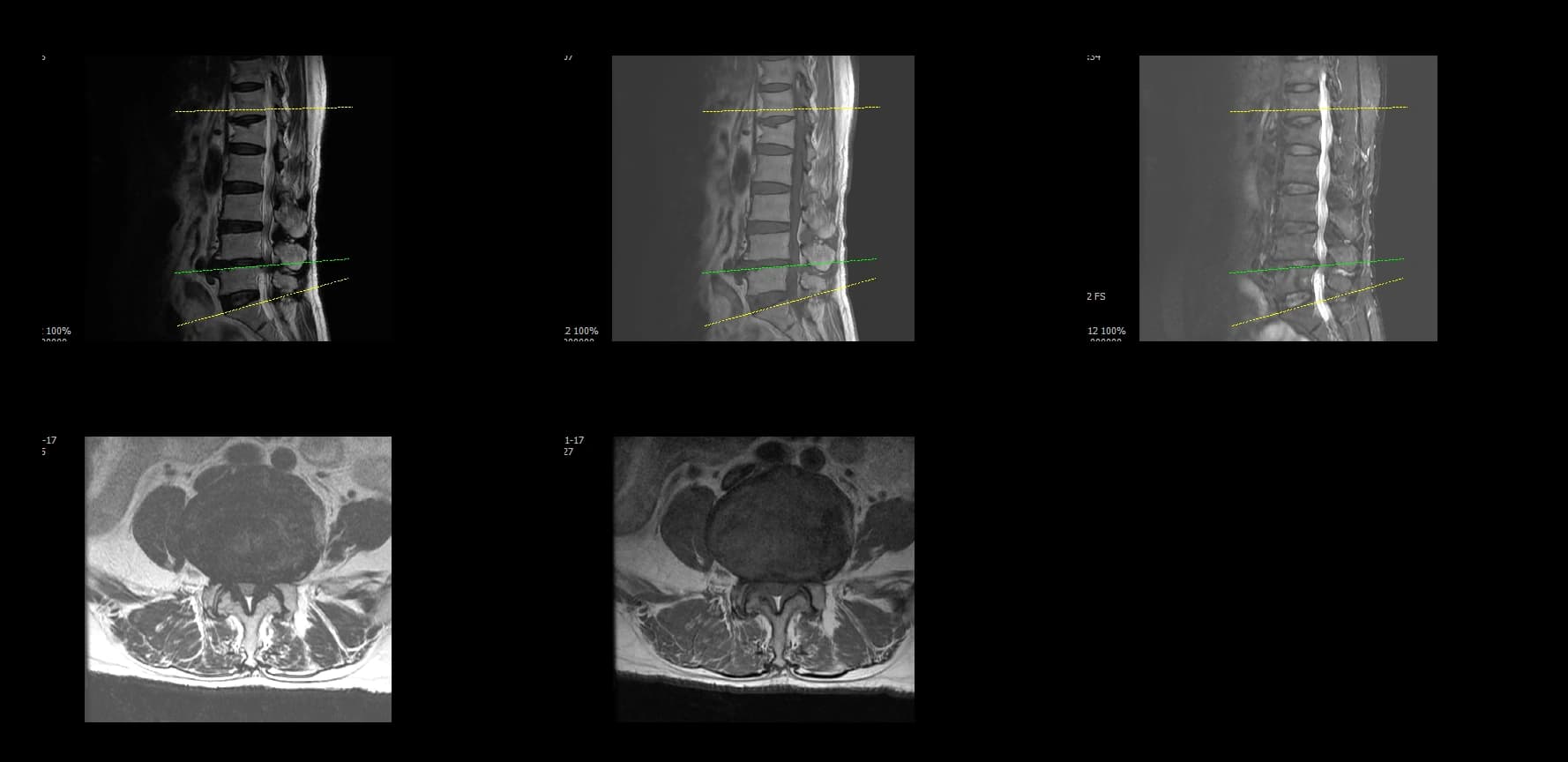
Preoperative lumbar radiographs and MRI demonstrated severe lumbar spinal stenosis at the clinically concordant level or levels. The stenosis pattern included narrowing of the neural canal and compression of the symptomatic neural structures. Imaging findings were interpreted together with the patient's symptoms and neurologic examination rather than as an imaging finding alone.
Surgical rationale
Biportal endoscopic decompression was selected to address the symptomatic neural compression while preserving stabilizing structures as appropriate. The surgical target was defined by the relationship between the patient's radicular symptoms, neurologic deficit, and imaging-symptom concordance.
Operative note summary
Biportal endoscopic lumbar decompression was performed. The operative workflow focused on identifying the stenotic segment, creating a controlled working corridor, and decompressing the neural elements. A key technical step was careful separation of the adherent ligamentum flavum from the dura. The dissection plane between the hypertrophied or adherent ligamentum flavum and the dura was handled cautiously to reduce dural injury risk during decompression.
Operative time
30 minutes.
Estimated blood loss
To be added after de-identification and editorial review.
Hospital stay
To be added after de-identification and editorial review.
Complications
To be added after de-identification and editorial review. If no perioperative complication was documented, this field may state that no perioperative complication was documented in this educational case summary.
Postoperative course
To be added after de-identification and editorial review. If neurologic or symptom improvement was documented, describe it as an observed course in this de-identified case only, not as a promised outcome.
Postoperative imaging summary
Postoperative imaging, if used, should demonstrate decompression at the operated level only after full de-identification. Do not include original screenshot overlays or identifiable image labels.
Educational point
This case illustrates that severe lumbar stenosis requires precise decompression planning and careful tissue-plane recognition. In severe stenosis, the ligamentum flavum may be hypertrophied or adherent to the dura. Safe decompression depends on identifying and maintaining the correct dissection plane between the ligamentum flavum and the dura, while avoiding unnecessary neural traction or blind instrument movement.

De-identified Clinical Images

Preoperative Images
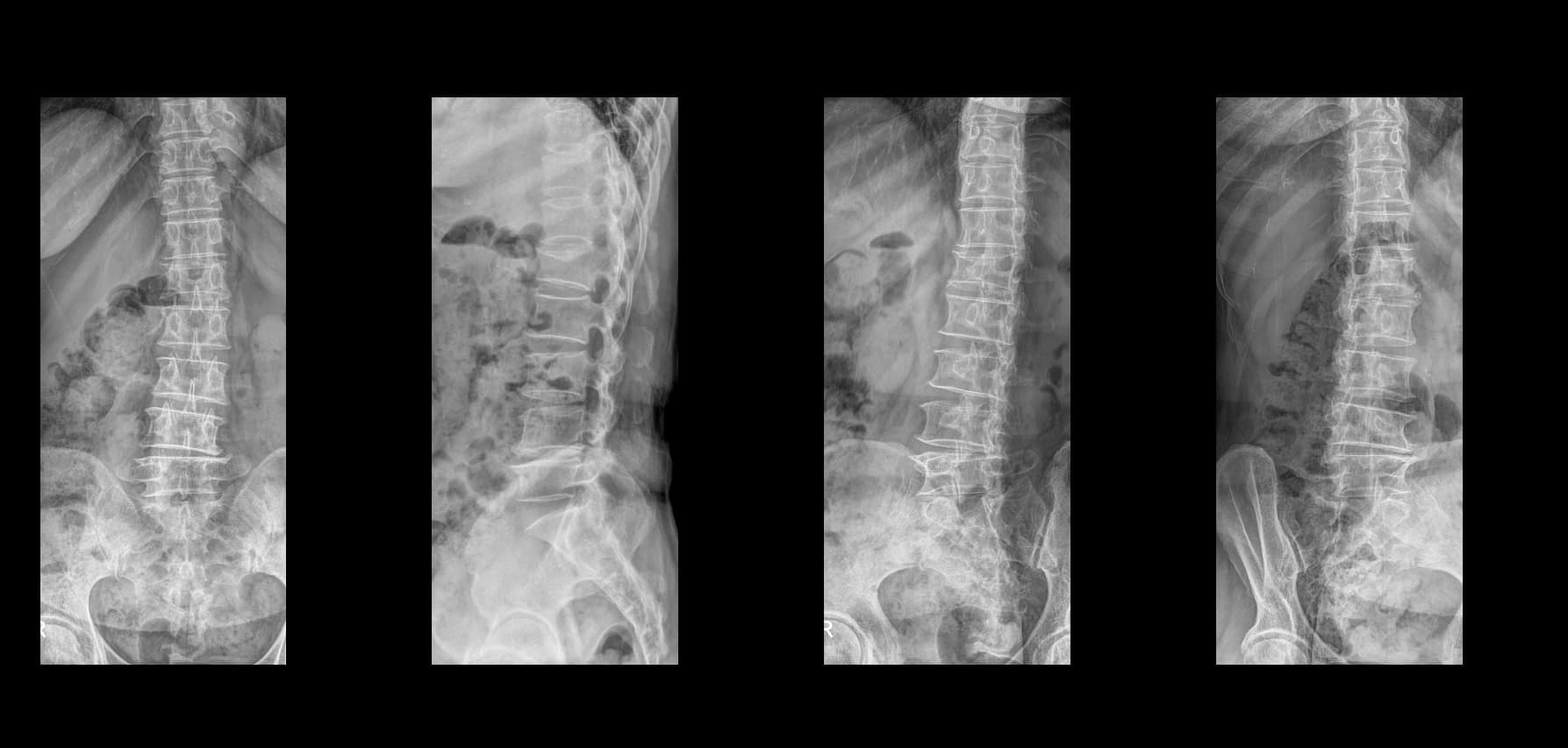
De-identified preoperative lumbar radiograph for severe lumbar spinal stenosis case.
De-identified preoperative radiograph used for lumbar level and alignment assessment.
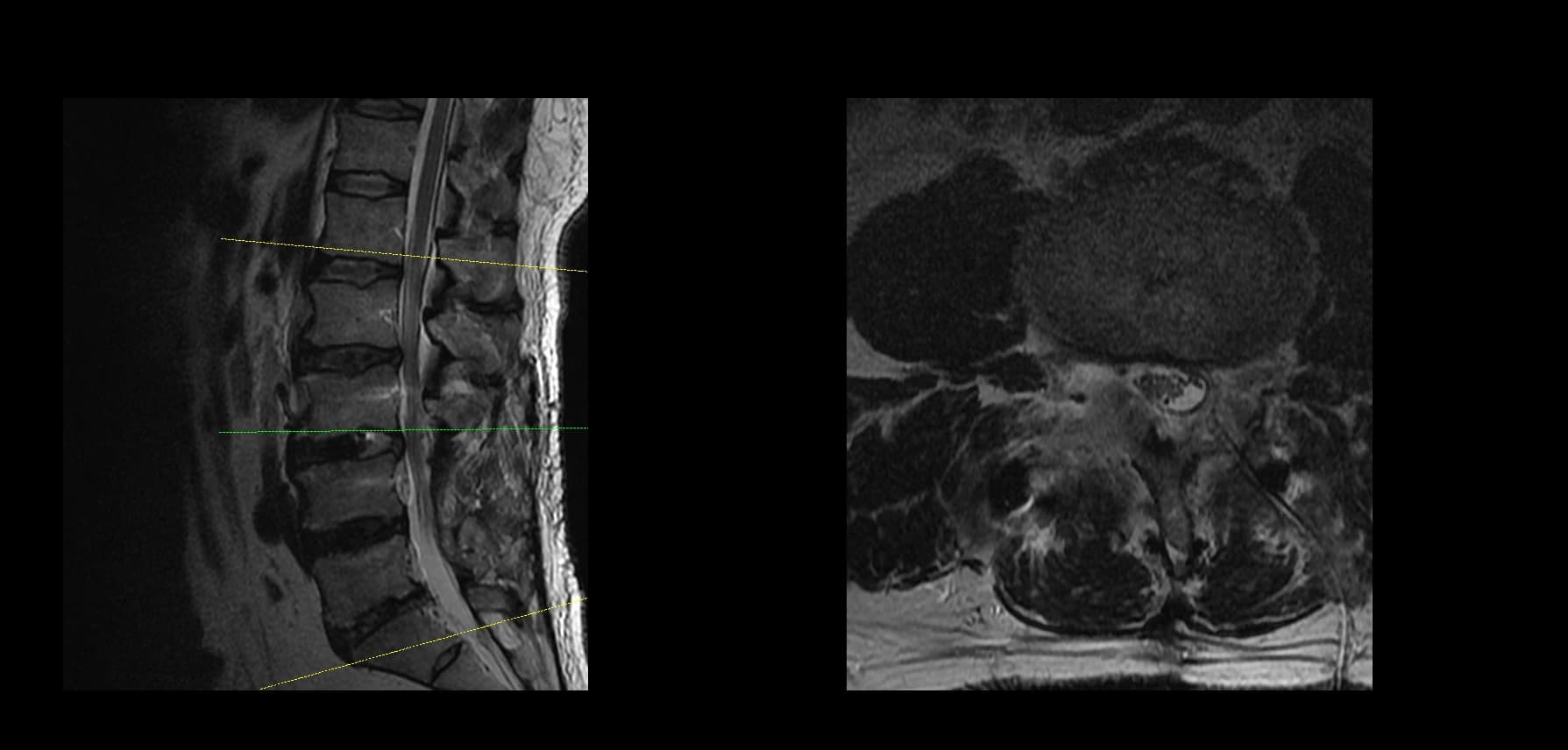
De-identified preoperative sagittal lumbar MRI demonstrating severe stenosis.
De-identified preoperative sagittal MRI demonstrating severe lumbar stenosis.
De-identified preoperative axial lumbar MRI demonstrating severe stenosis.
De-identified preoperative axial MRI demonstrating neural canal narrowing at the clinically concordant level.

Postoperative Images

De-identified postoperative sagittal lumbar MRI after endoscopic decompression.
De-identified postoperative sagittal MRI after biportal endoscopic decompression.
De-identified postoperative axial lumbar MRI after endoscopic decompression.
De-identified postoperative axial MRI after decompression at the operated level.

This case is presented for educational discussion only. It is de-identified and should not be interpreted as predicting a similar clinical course in another patient.
Case 02

Degenerative Spondylolisthesis With Left Foot Drop Treated With UBE-TLIF

UBE-TLIF for Degenerative Spondylolisthesis With Foot Drop

Diagnosis
Degenerative lumbar spondylolisthesis at L4-L5 with foraminal stenosis and left-sided neurologic deficit.
Procedure
Left-sided UBE-TLIF at L4-L5.
Surgical level
L4-L5.
Clinical presentation
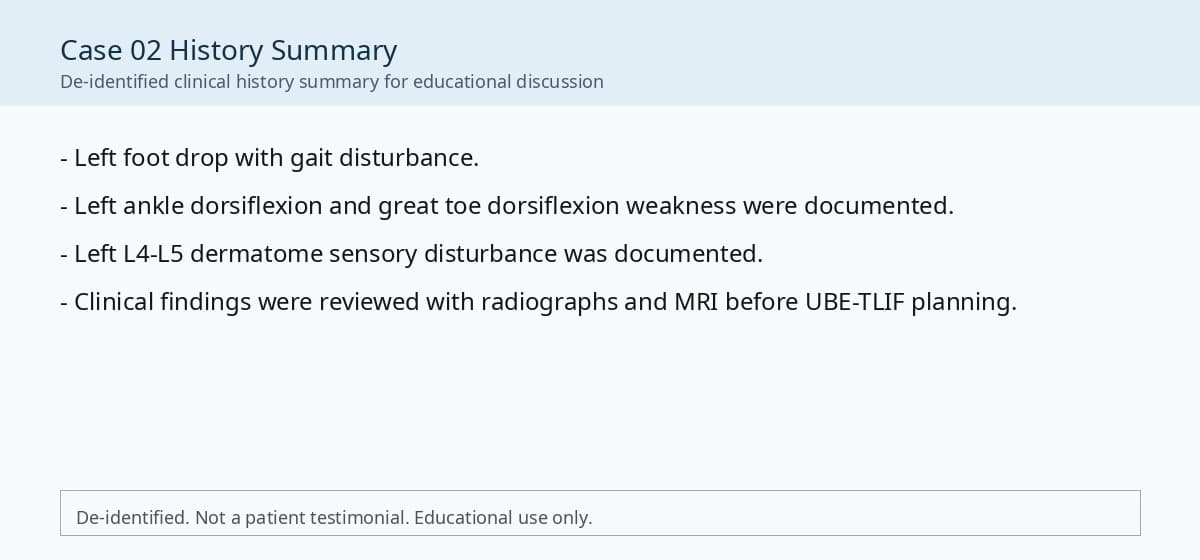
The patient presented with severe left leg pain, gait disturbance, and left foot drop. The clinical symptoms were associated with sensory disturbance in the left L4-L5 dermatome and motor weakness involving ankle dorsiflexion and great toe dorsiflexion.
Neurologic findings
Preoperative neurologic examination demonstrated left ankle dorsiflexion weakness, approximately grade 3, and left great toe dorsiflexion weakness, approximately grade 3. Sensory disturbance was documented in the left L4-L5 dermatome. Gait disturbance was clinically significant.
Imaging summary
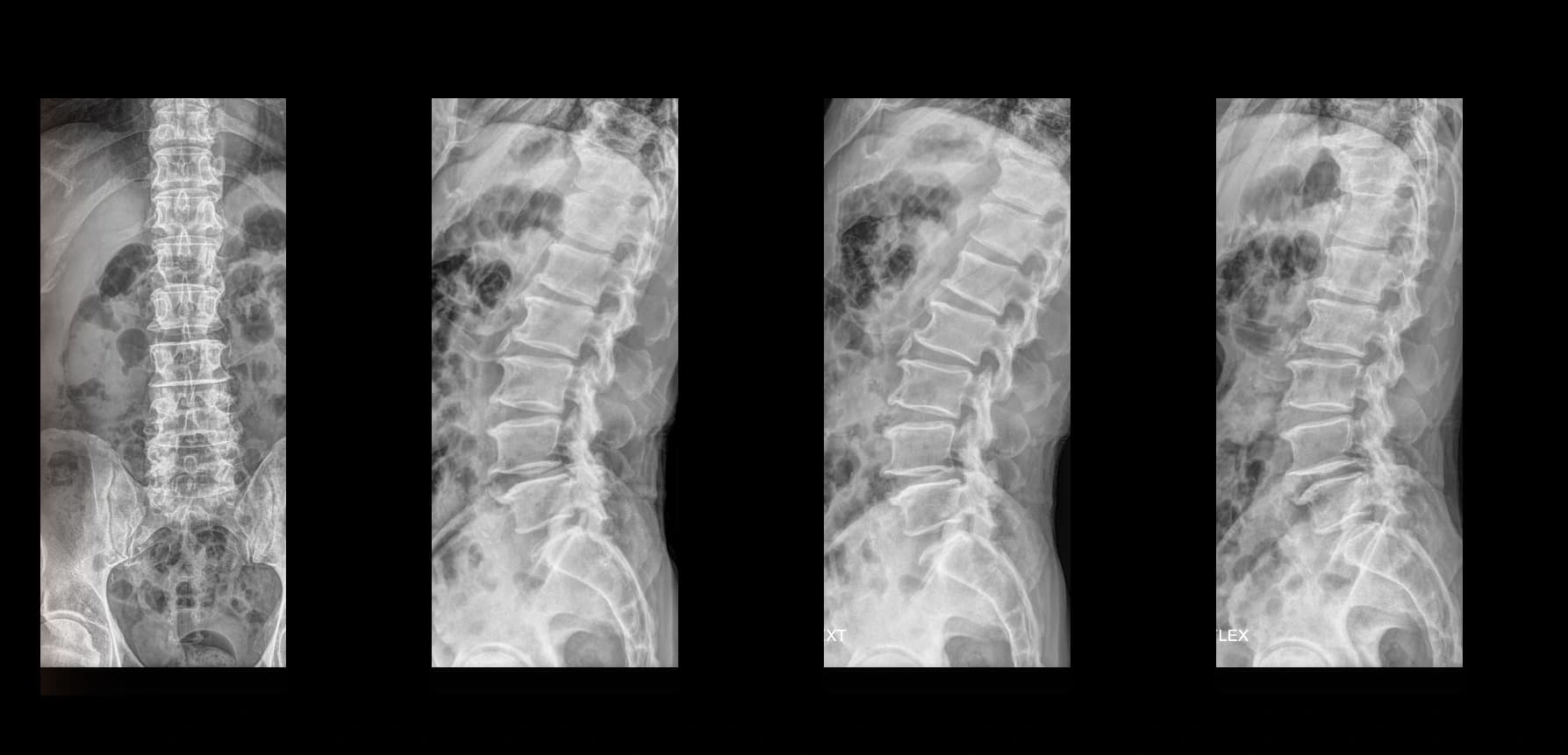
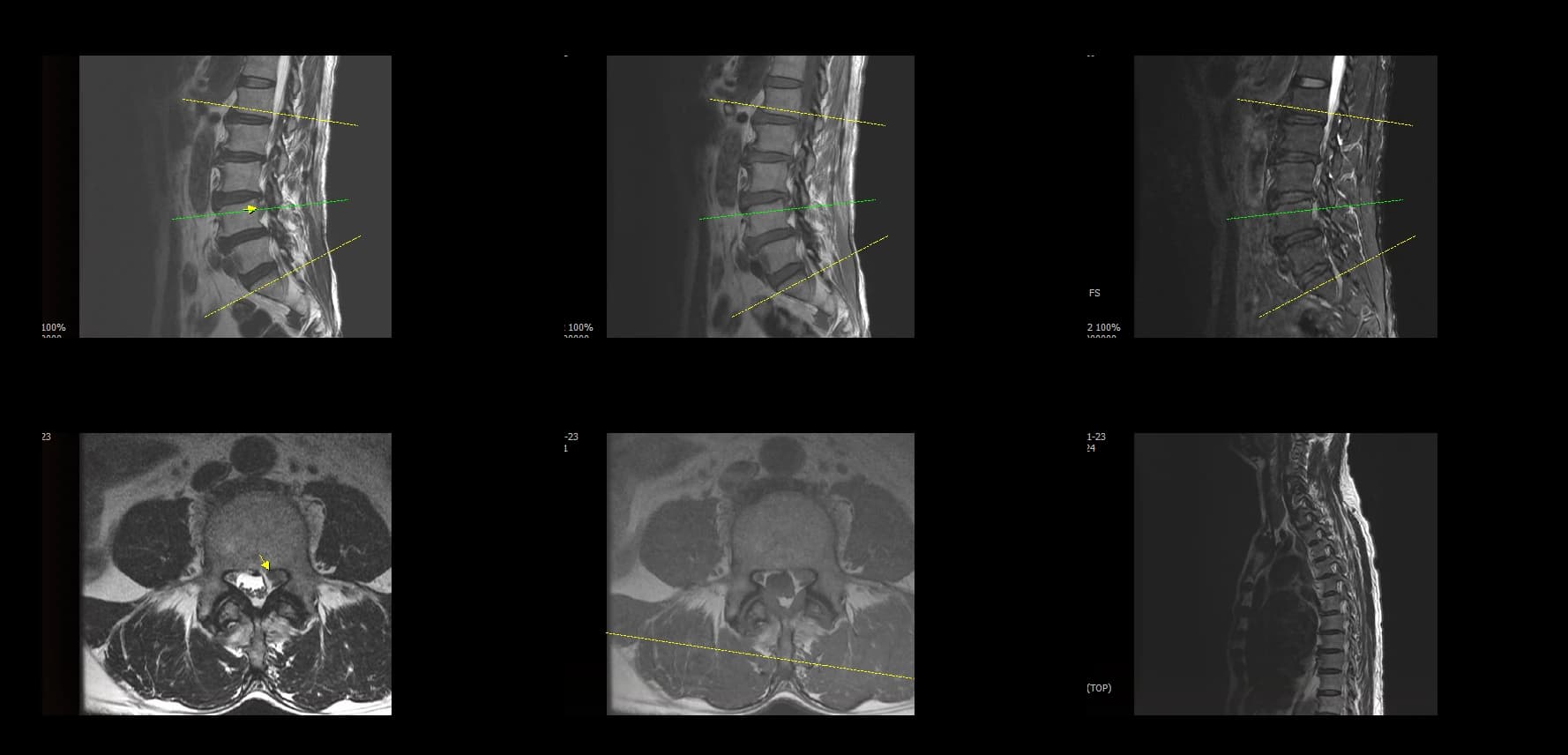
Preoperative lumbar radiographs and MRI demonstrated L4-L5 degenerative spondylolisthesis with foraminal stenosis and neural compression concordant with the patient's left-sided radicular symptoms, sensory disturbance, and foot drop. Dynamic radiographs were reviewed as part of the instability assessment.
Surgical rationale
The case was considered for fusion because the symptomatic level showed degenerative spondylolisthesis, foraminal stenosis, and neurologic deficit. The surgical objective was to decompress the affected neural structures and stabilize the L4-L5 segment.
Operative note summary
A left-sided UBE-TLIF was performed at L4-L5. The procedure included endoscopic decompression, disc space preparation, interbody fusion, cage placement, and posterior fixation. The operative workflow emphasized clear surgical targeting, efficient decompression, neural protection, and stabilization of the symptomatic segment.
Operative time
45 minutes.
Estimated blood loss
Approximately 200 mL.
Hospital stay
4 days.
Complications
No perioperative complication was documented in this educational case summary.
Postoperative course
Postoperative neurologic follow-up documented improvement of the left-sided motor deficit from approximately grade 3 to grade 4+. This postoperative course is presented as an observation from this de-identified case only and should not be interpreted as predicting similar recovery in other patients.
Postoperative imaging summary
Postoperative radiographs demonstrated L4-L5 interbody fusion and posterior fixation. Postoperative MRI demonstrated decompression at the operated level. Imaging should be presented only after full de-identification.
Educational point
This case illustrates surgical decision-making in degenerative spondylolisthesis with foraminal stenosis and objective neurologic deficit. In UBE-TLIF, the rationale for fusion should be established first, based on instability, foraminal stenosis, neural compression, and neurologic findings. When fusion is performed in a spinal anesthesia environment, efficient operative workflow, precise surgical targeting, and reduction of unnecessary operative time may be important technical considerations. This should be presented as a technical teaching point rather than a general claim that all fusion surgery should be performed under spinal anesthesia.

De-identified Clinical Images

Clinical History Summary

De-identified clinical history summary for UBE-TLIF educational case.
De-identified clinical history summary used for educational discussion.

Preoperative Images

De-identified preoperative lumbar radiograph demonstrating degenerative spondylolisthesis.
De-identified preoperative radiograph demonstrating L4-L5 degenerative spondylolisthesis and alignment assessment.
De-identified preoperative sagittal lumbar MRI for UBE-TLIF case.
De-identified preoperative sagittal MRI demonstrating L4-L5 degenerative pathology.
De-identified preoperative axial lumbar MRI demonstrating foraminal stenosis.
De-identified preoperative axial MRI demonstrating foraminal stenosis and neural compression.

Postoperative Images

De-identified postoperative lumbar radiograph after L4-L5 UBE-TLIF.
De-identified postoperative radiograph after L4-L5 interbody fusion and posterior fixation.
De-identified postoperative sagittal lumbar MRI after UBE-TLIF.
De-identified postoperative sagittal MRI after decompression and fusion.
De-identified postoperative axial lumbar MRI after UBE-TLIF.
De-identified postoperative axial MRI after decompression at the operated level.

This case is presented for educational discussion only. It is de-identified and should not be interpreted as predicting a similar clinical course in another patient.
Case 03

Revision Endoscopic Lumbar Interbody Fusion After Previous Lumbar Surgery

Revision Endoscopic Lumbar Interbody Fusion

Diagnosis
Recurrent or persistent lumbar symptoms after previous lumbar surgery, with clinically concordant imaging findings and objective neurologic deficit requiring revision endoscopic lumbar interbody fusion.
Procedure
Revision endoscopic lumbar interbody fusion at the clinically concordant level.
Surgical level
Clinically concordant lumbar revision level.
Clinical presentation
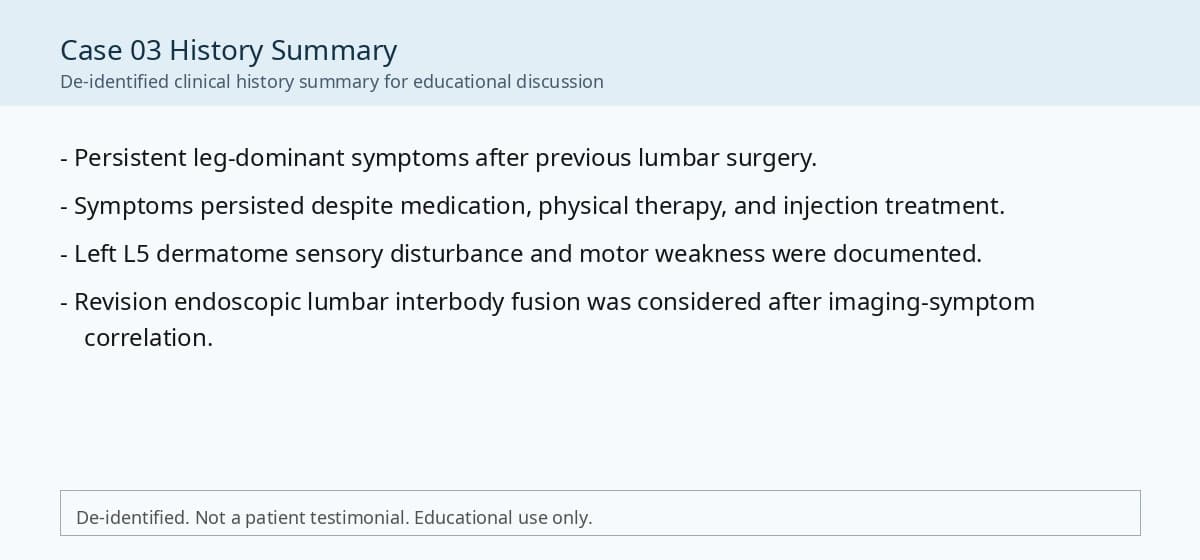
The patient presented with persistent leg-dominant symptoms after previous lumbar surgery. Symptoms continued despite medication, physical therapy, and injection treatment. The case was evaluated for revision surgical treatment because symptoms and neurologic findings persisted.
Neurologic findings
Preoperative neurologic examination demonstrated left L5 dermatome sensory disturbance, left ankle dorsiflexion weakness approximately grade 3, and left great toe dorsiflexion weakness approximately grade 3.
Conservative treatment summary
Symptoms persisted despite medication, physical therapy, and injection treatment. Revision surgery was considered because the symptoms remained clinically significant and were associated with objective neurologic deficit.
Imaging summary
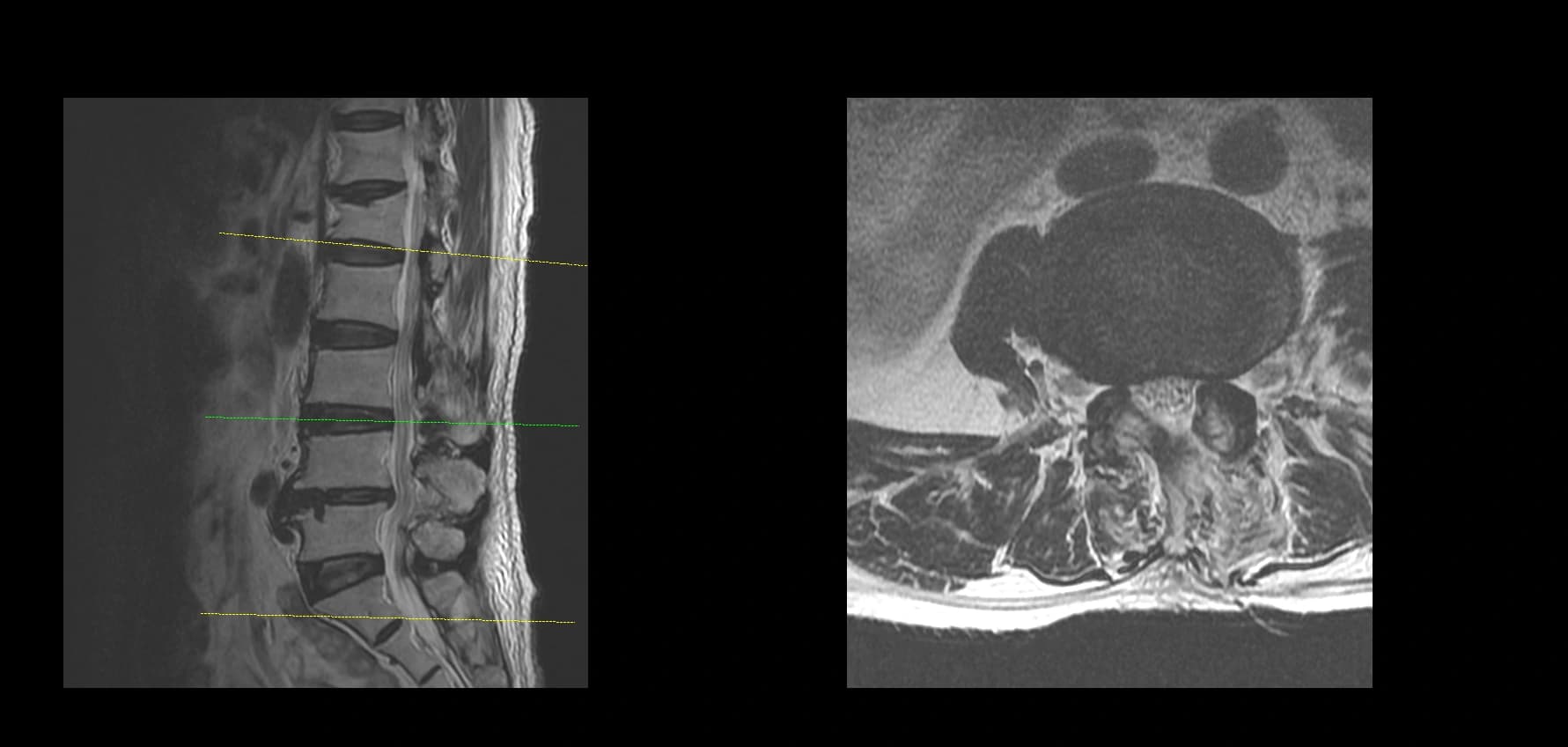
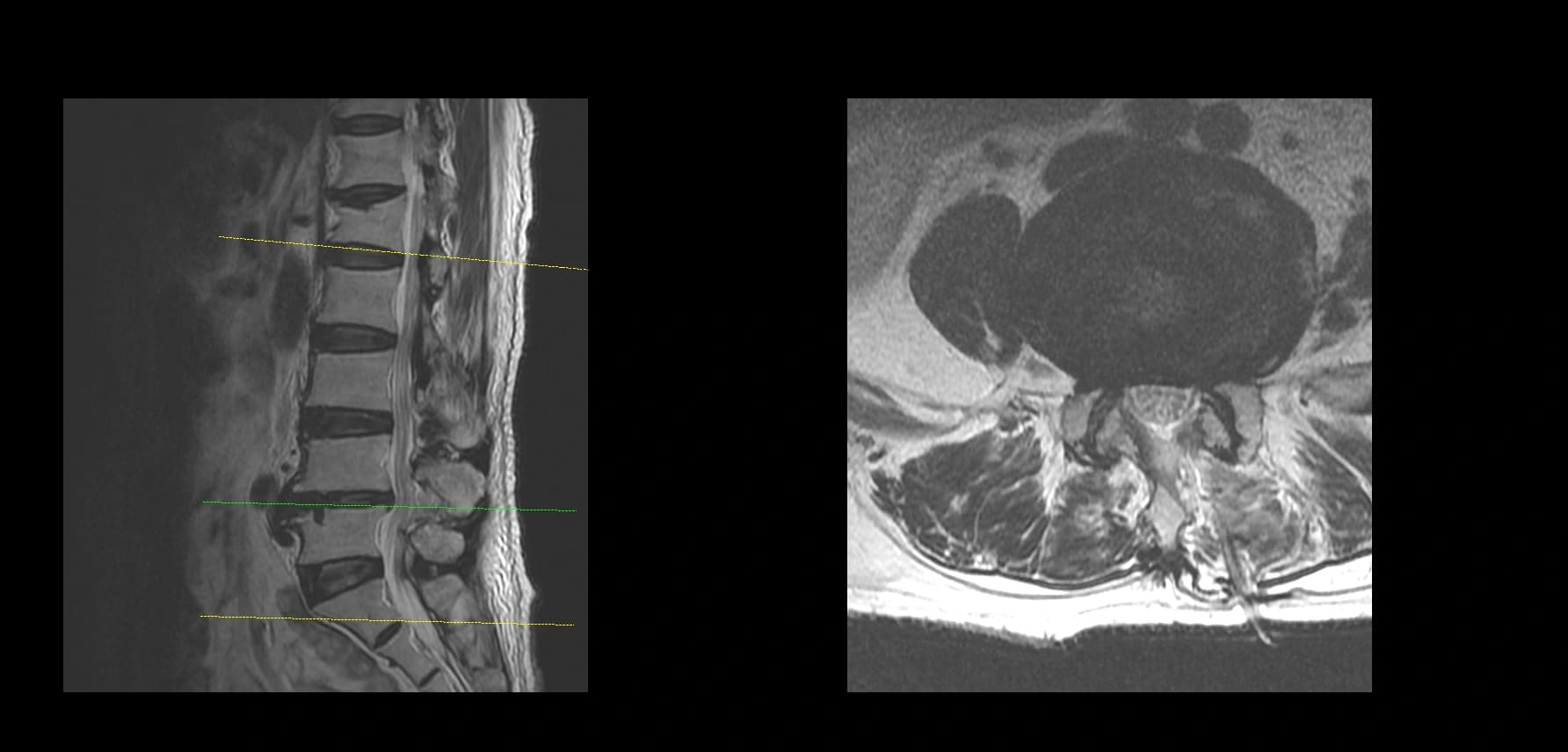
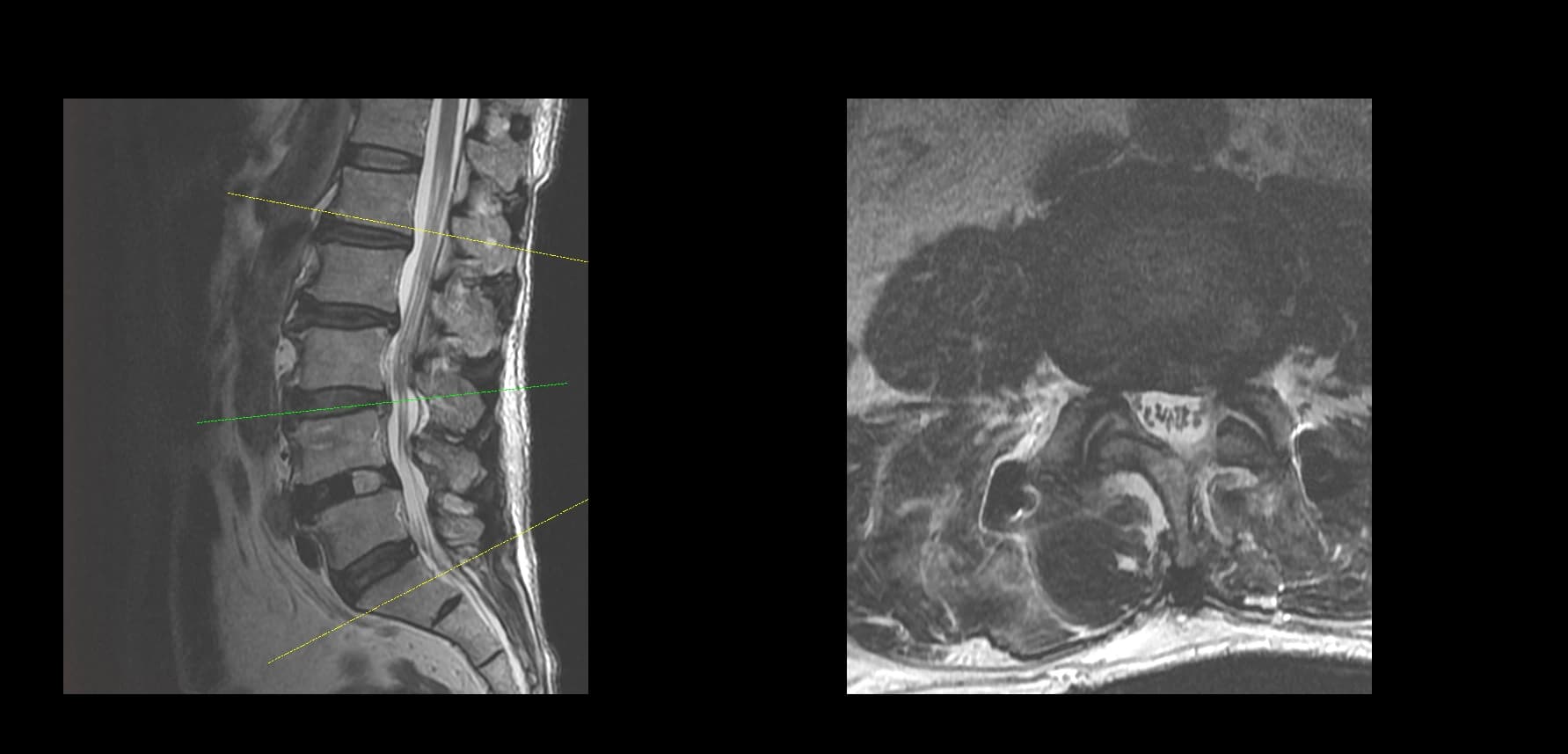
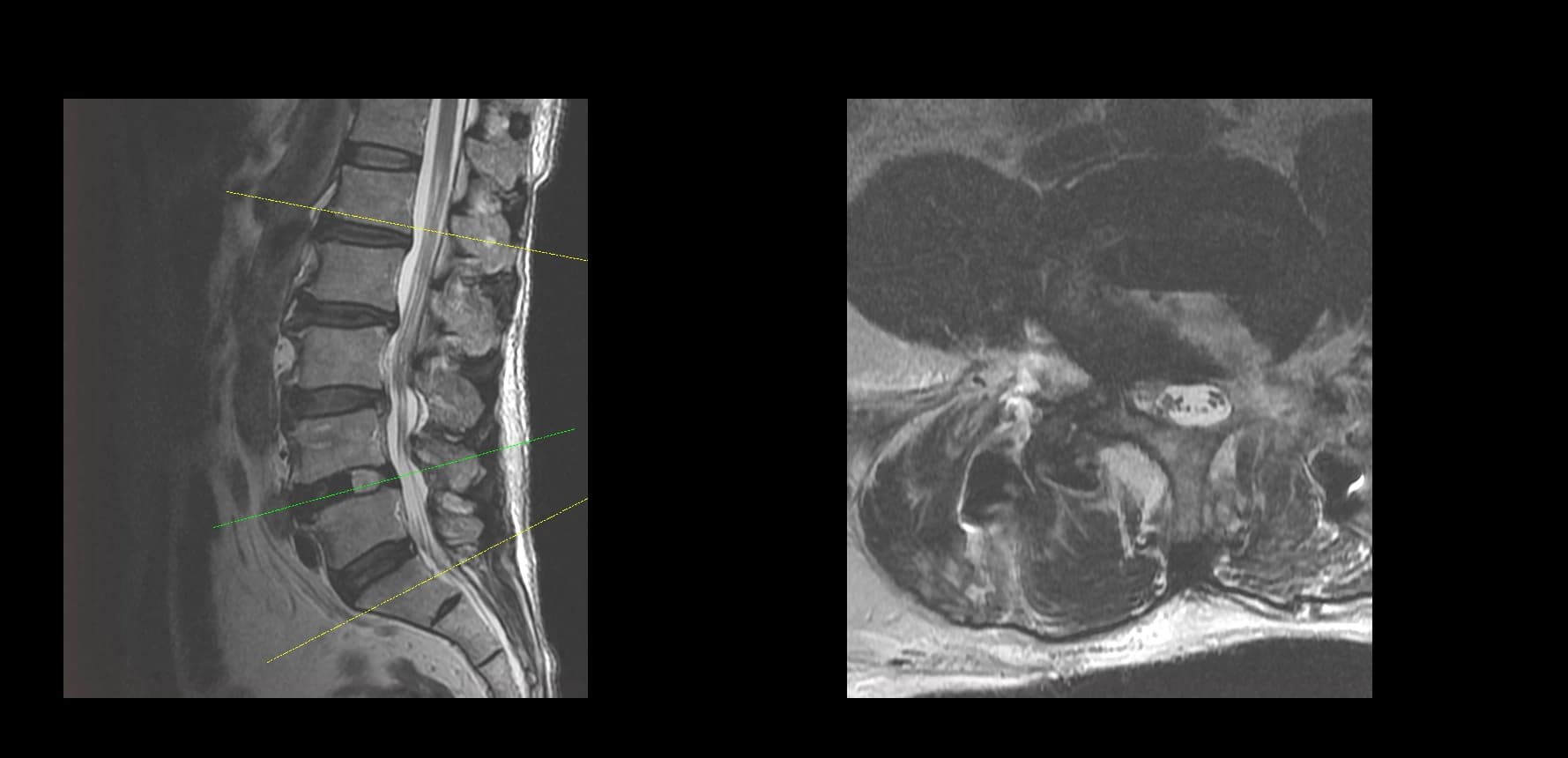
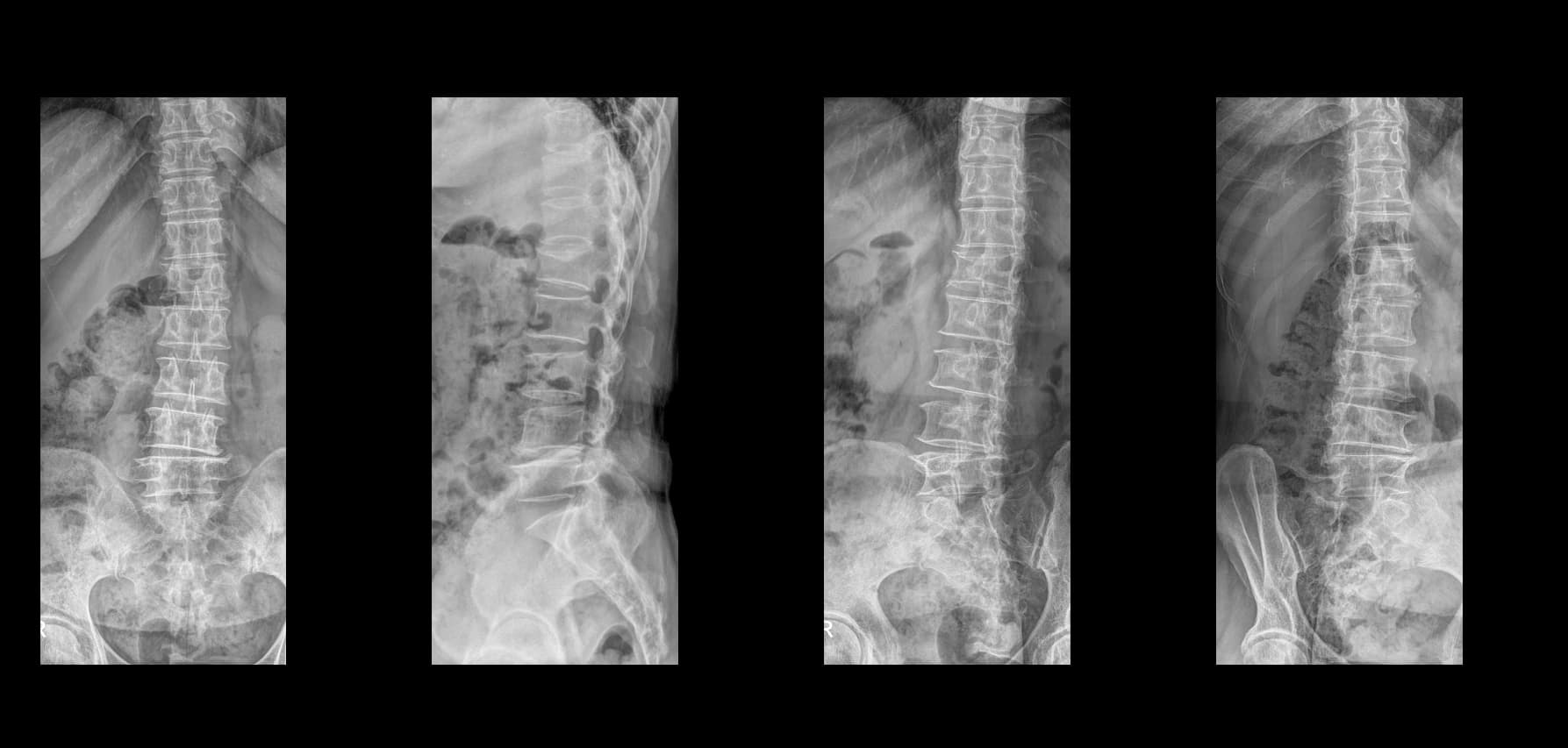
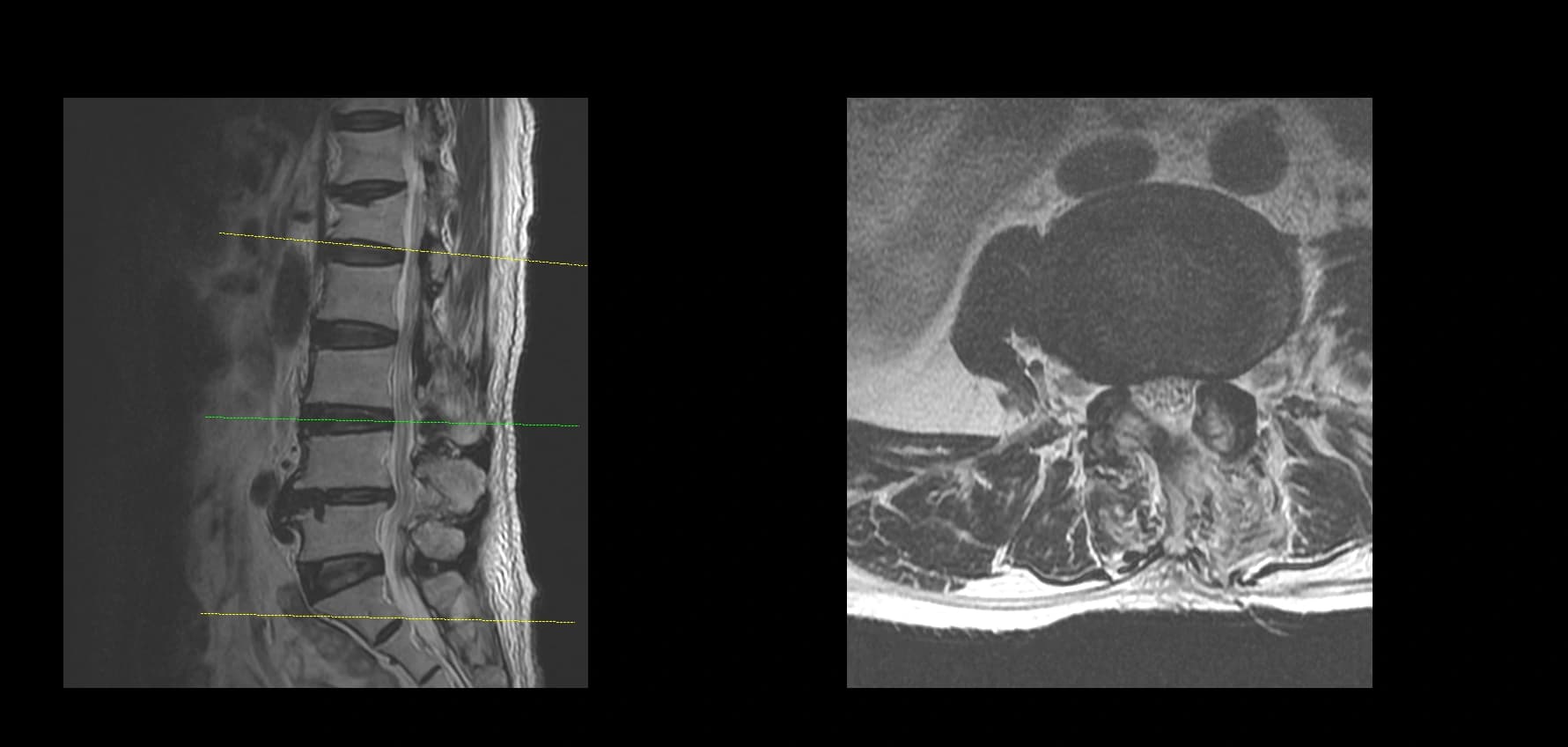
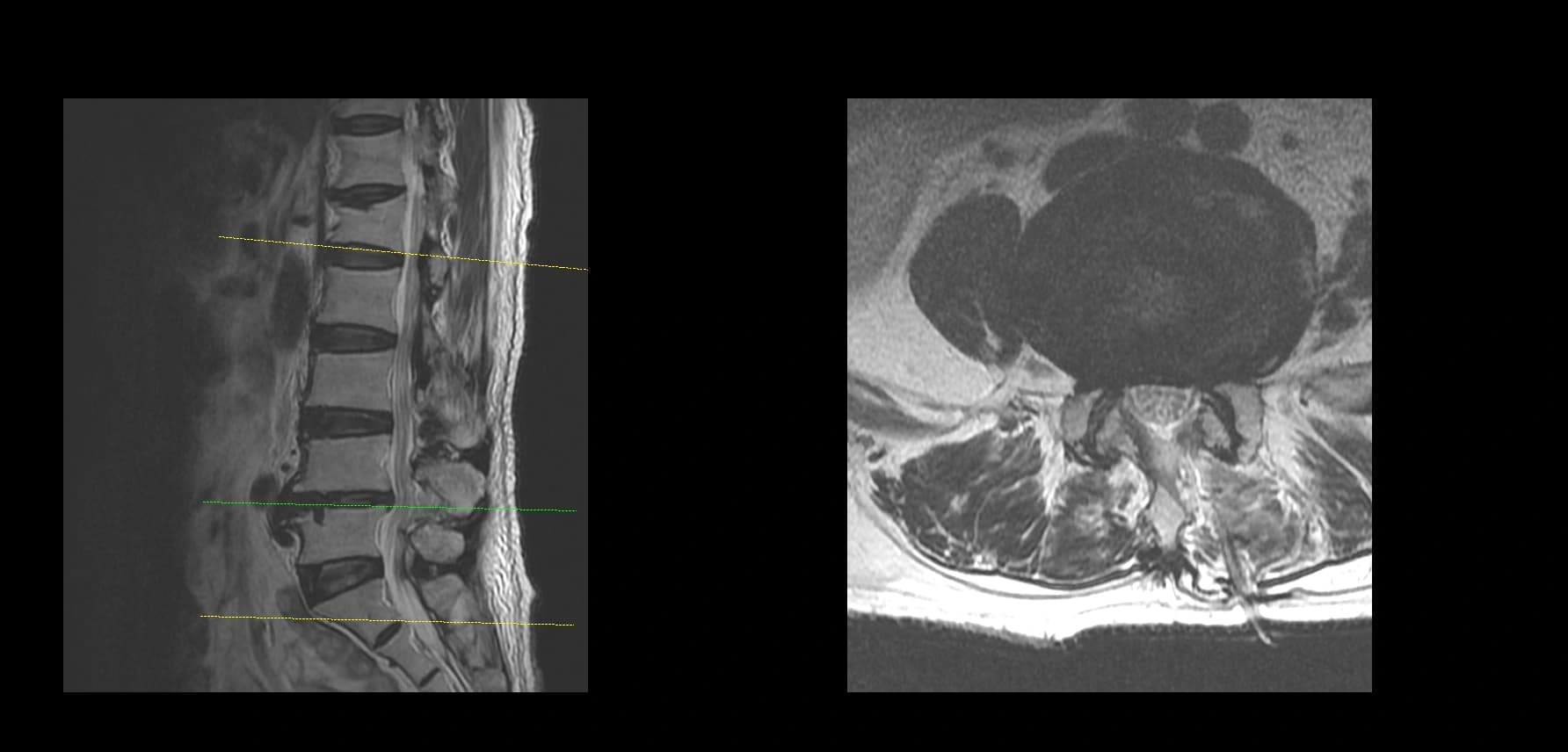
Preoperative radiographs and MRI demonstrated postoperative lumbar changes from the previous surgery and recurrent or residual pathology at the clinically concordant level. Imaging findings were reviewed together with the patient's symptoms and neurologic examination to determine the revision target and the need for interbody fusion rather than decompression alone.
Surgical rationale
Revision endoscopic lumbar interbody fusion was selected because the patient had persistent or recurrent symptoms after previous lumbar surgery, associated with objective neurologic deficit and imaging-symptom concordance. The operative objective was decompression of the symptomatic neural structures together with stabilization of the pathologic segment when appropriate.
Operative note summary
Revision endoscopic lumbar interbody fusion was performed. The operative workflow focused on safe re-entry into the previous surgical field, careful dissection through scarred tissue, identification of the symptomatic level, neural decompression, disc space preparation, interbody fusion, and stabilization as appropriate. A key technical point in this revision setting was cautious dissection of adhesions related to the previous surgery, with attention to avoiding unnecessary traction or injury to neural and dural structures.
Operative time
90 minutes.
Estimated blood loss
Approximately 450 mL.
Hospital stay
7 days.
Complications
To be added after de-identification and editorial review.
Postoperative course
To be added after de-identification and editorial review. If clinical improvement was documented, it should be described as an observed postoperative course in this de-identified case only.
Postoperative imaging summary
Postoperative imaging should demonstrate revision decompression and interbody fusion changes at the operated level only after full de-identification. Original screenshot overlays or identifiable image labels should not be used.
Educational point
This case illustrates that revision endoscopic lumbar interbody fusion after previous lumbar surgery requires careful surgical planning and controlled tissue handling. In the revision setting, adhesions from the prior operation may obscure normal tissue planes. Careful dissection of scarred and adherent tissue is essential to maintain a safe working corridor and to reduce the risk of neural or dural injury.

De-identified Clinical Images

Clinical History Summary

De-identified history summary for revision endoscopic lumbar interbody fusion case.
De-identified preoperative history summary for revision endoscopic lumbar interbody fusion.

Preoperative Images

De-identified preoperative lumbar radiograph for revision fusion assessment.
De-identified preoperative radiograph used for lumbar alignment and revision assessment.
De-identified preoperative sagittal lumbar MRI for revision endoscopic fusion case.
De-identified preoperative sagittal MRI demonstrating recurrent or residual lumbar pathology after previous surgery.
De-identified preoperative axial lumbar MRI for revision endoscopic fusion case.
De-identified preoperative axial MRI demonstrating recurrent or residual neural compression.

Postoperative Images

De-identified postoperative sagittal lumbar MRI after revision endoscopic fusion.
De-identified postoperative sagittal MRI after revision endoscopic lumbar interbody fusion.
De-identified postoperative axial lumbar MRI after revision endoscopic fusion.
De-identified postoperative axial MRI after revision decompression and fusion.

This case is presented for educational discussion only. It is de-identified and should not be interpreted as predicting a similar clinical course in another patient.
Case 04

Adjacent Segment Disease With Bilateral Foot Drop Treated With UBE Extension Fusion

UBE Extension Fusion for Adjacent Segment Disease

Diagnosis
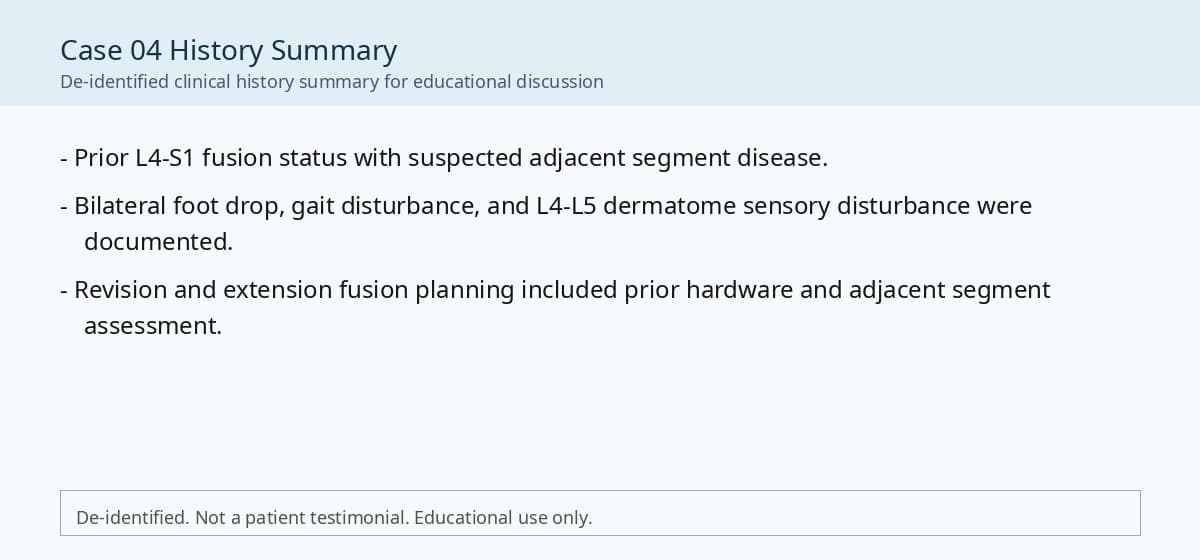
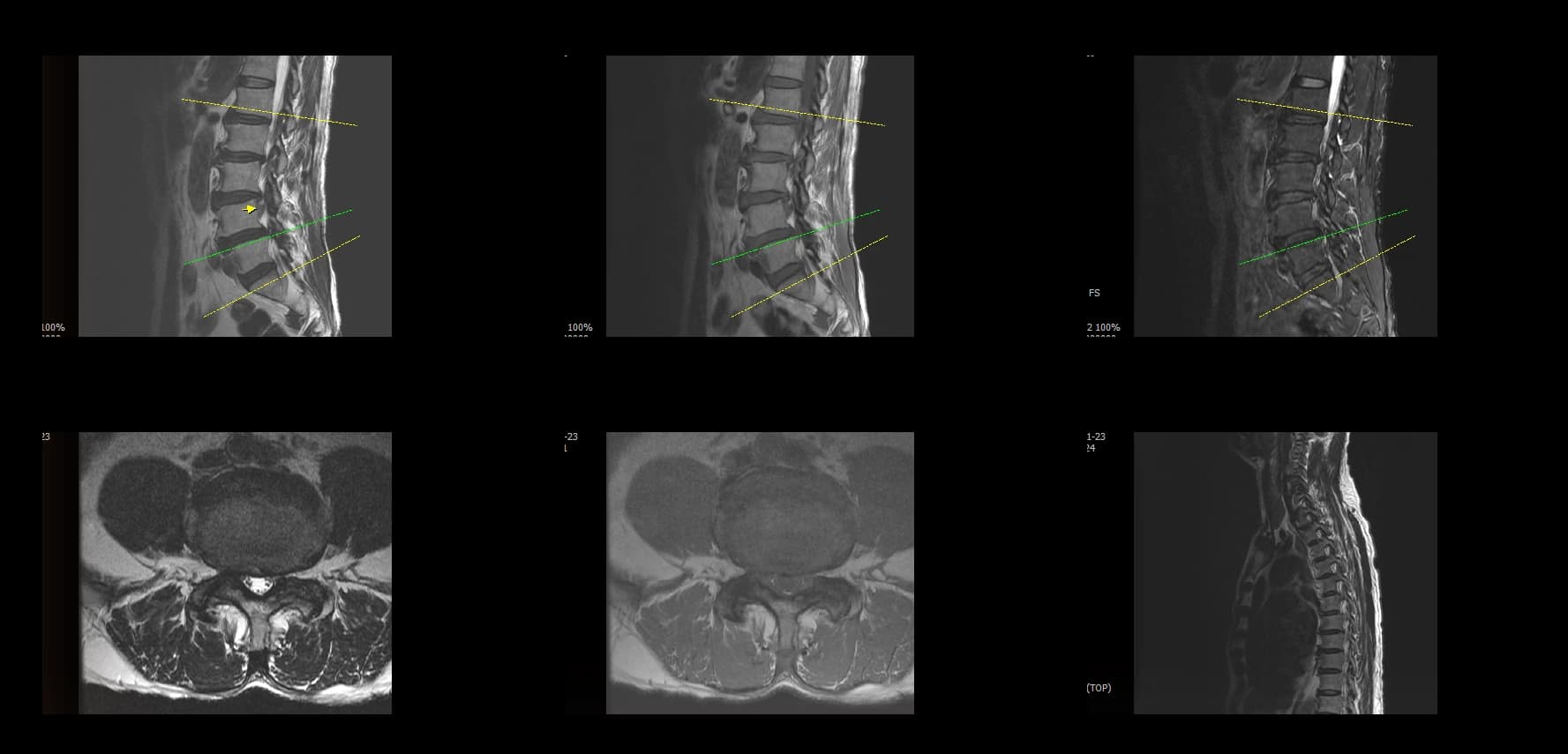
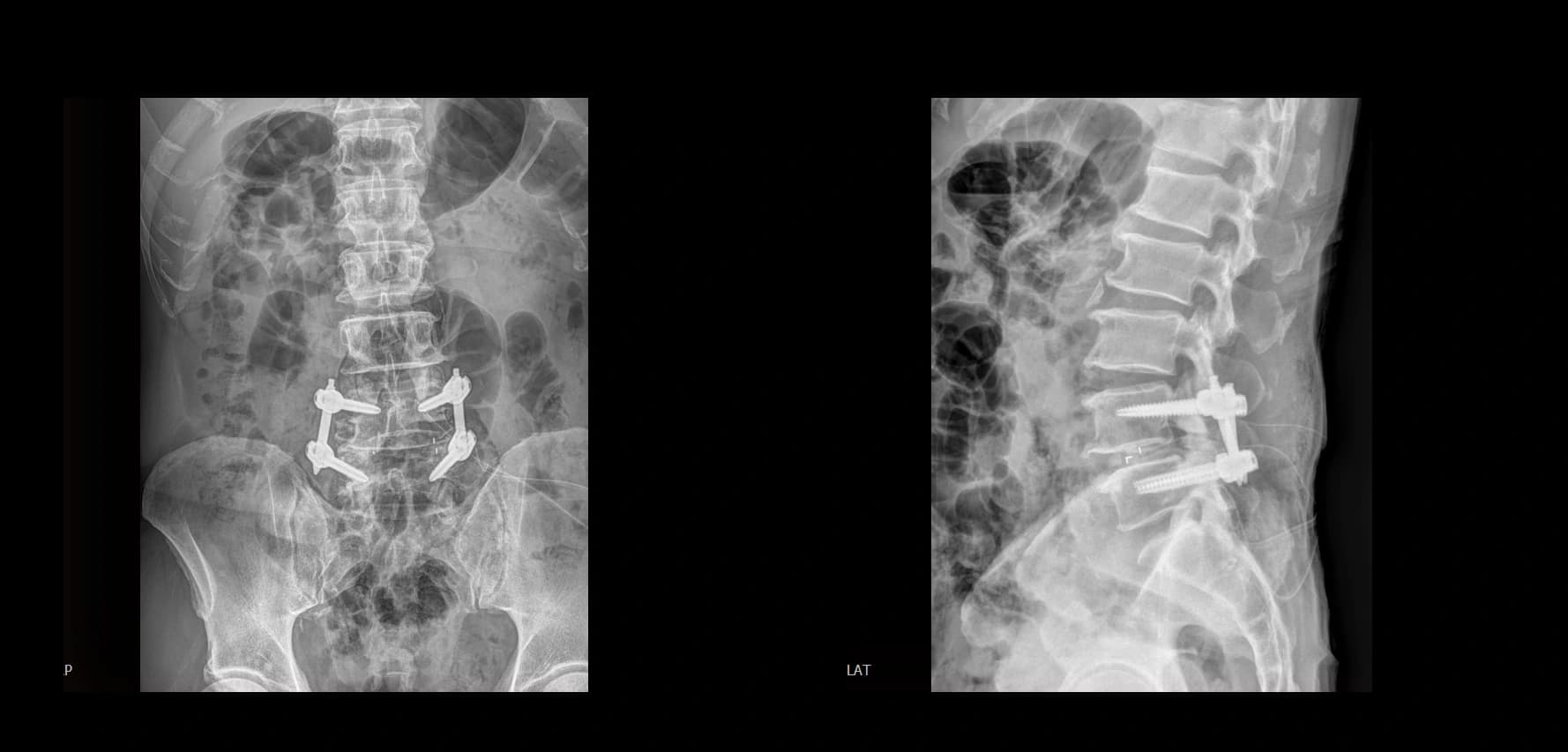
Adjacent segment disease at L3-L4 after previous L4-S1 fusion, associated with stenosis and bilateral neurologic deficit.
Procedure
UBE-assisted screw removal and extension fusion at L3-L4.
Surgical level
Prior fusion construct: L4-L5-S1. Adjacent segment pathology: L3-L4. Revision and extension fusion field: L3-L4-L5-S1.
Clinical presentation
The patient presented with bilateral foot drop, gait disturbance, and sensory disturbance involving the L4-L5 dermatomes. The symptoms developed in the setting of previous lumbar fusion and were evaluated as a possible adjacent segment disease pattern.
Neurologic findings
Preoperative neurologic examination demonstrated bilateral ankle dorsiflexion weakness, approximately grade 3, and bilateral great toe dorsiflexion weakness, approximately grade 3. Sensory disturbance was documented in the bilateral L4-L5 dermatomes. Gait disturbance was clinically significant.
Imaging summary
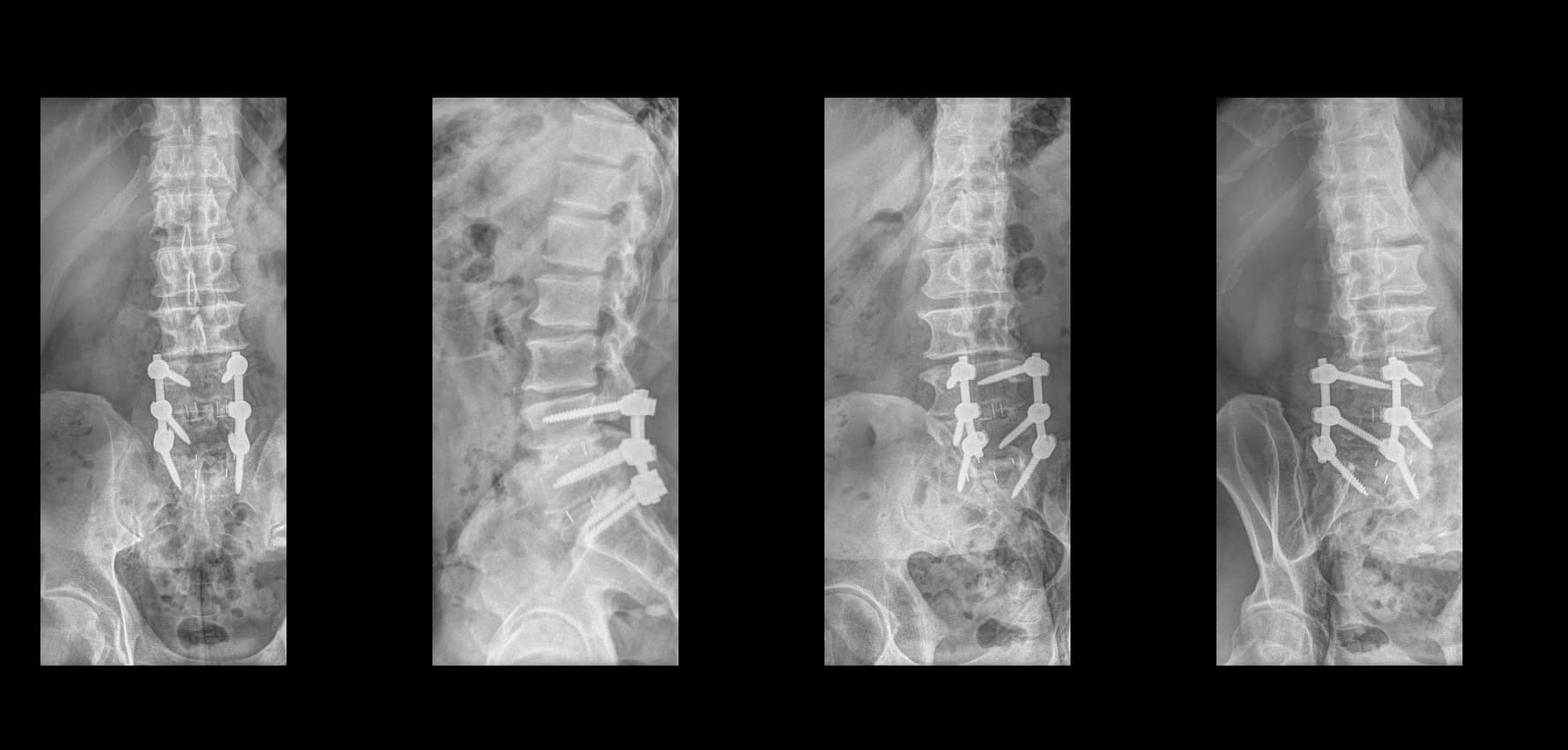
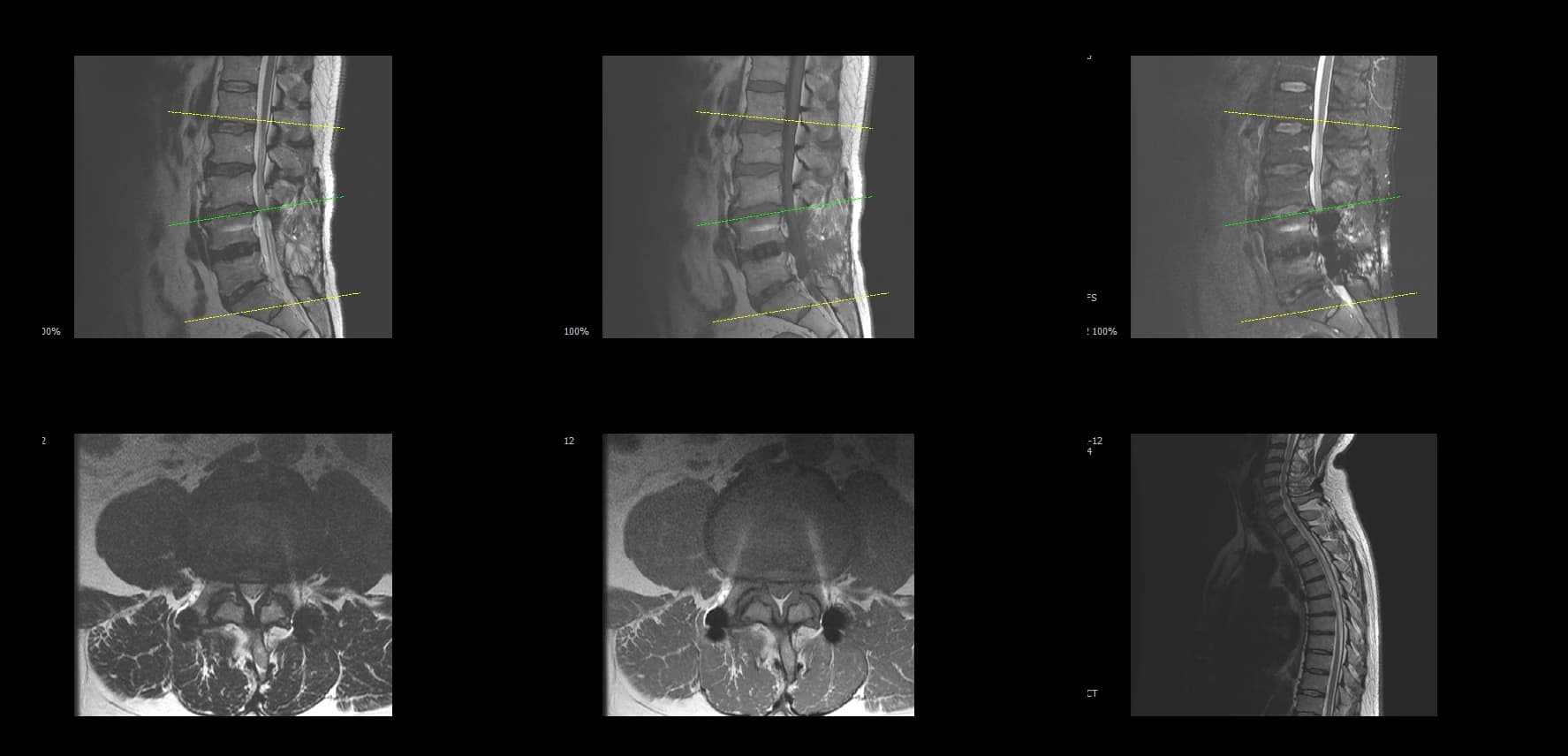
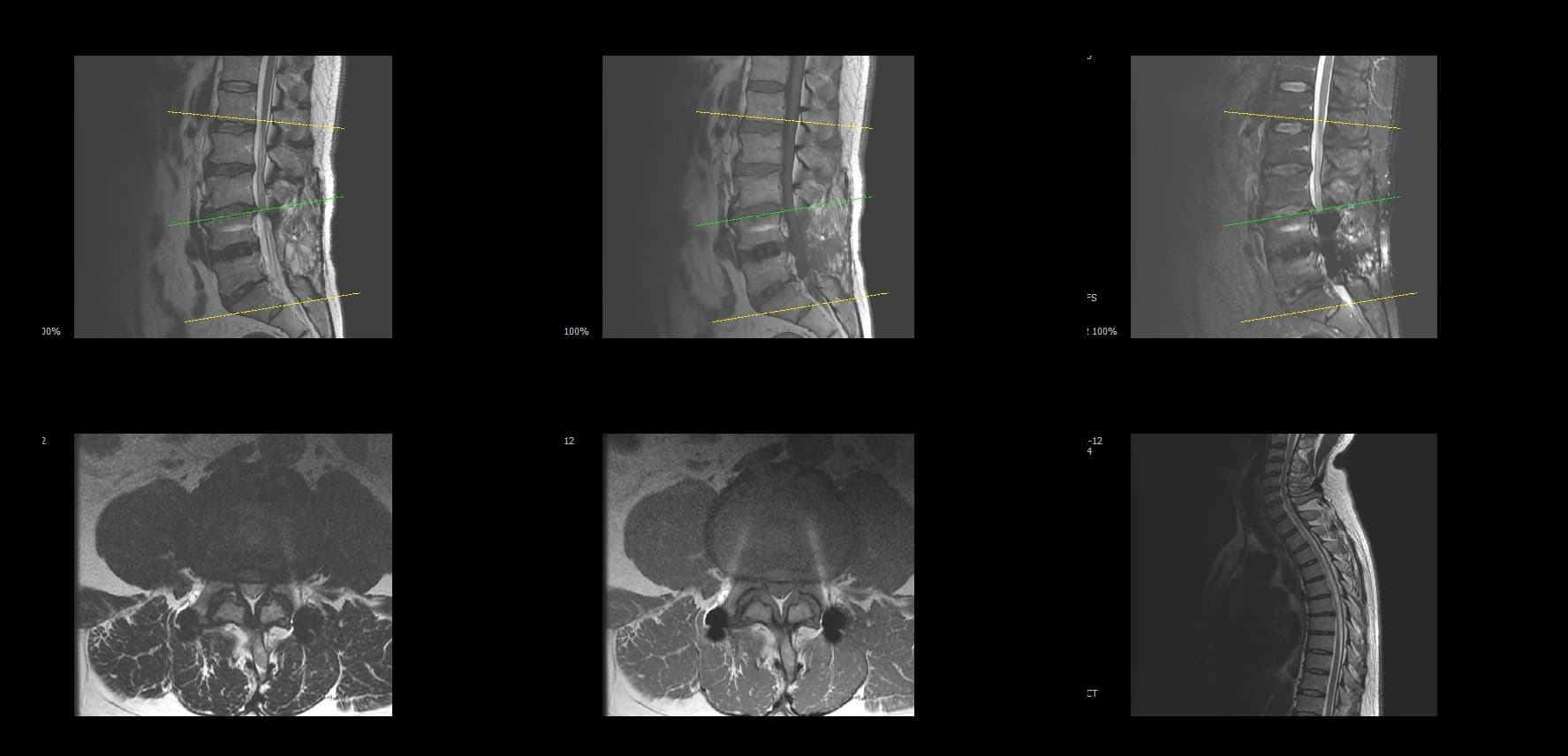
Preoperative lumbar radiographs and MRI demonstrated previous L4-L5-S1 fusion status with adjacent segment pathology at L3-L4. The L3-L4 level showed stenosis and neural compression concordant with the patient's bilateral neurologic symptoms. Dynamic radiographs and postoperative fusion status were reviewed as part of the revision and extension fusion planning.
Surgical rationale
The case was considered for revision and extension fusion because the patient had symptomatic adjacent segment disease above a prior fusion construct, with bilateral foot drop and imaging findings concordant with L3-L4 neural compression. The surgical objective was to decompress the affected neural structures and extend stabilization to the adjacent symptomatic level.
Operative note summary
UBE-assisted extension fusion was performed at L3-L4 in the setting of a previous L4-L5-S1 fusion construct. The procedure included careful exposure and dissection around the previous screw heads, screw removal or revision as required for extension of the construct, endoscopic decompression, disc space preparation, interbody fusion, cage placement, and posterior fixation. Particular attention was given to identifying the prior hardware safely and minimizing unnecessary tissue disruption during screw-head exposure and removal.
Operative time
65 minutes.
Estimated blood loss
Approximately 300 mL.
Hospital stay
5 days.
Complications
No perioperative complication was documented in this educational case summary.
Postoperative course
Postoperative neurologic follow-up documented improvement of the bilateral motor deficit from approximately grade 3 to grade 5. This postoperative course is presented as an observation from this de-identified case only and should not be interpreted as predicting similar recovery in other patients.
Postoperative imaging summary
Postoperative radiographs demonstrated extension fusion involving the adjacent L3-L4 level in relation to the prior L4-L5-S1 fusion construct. Postoperative imaging should be shown only after complete de-identification.
Educational point
This case illustrates surgical decision-making in adjacent segment disease after previous lumbar fusion. In revision and extension fusion, the operative target should be supported by symptoms, neurologic findings, prior fusion status, and imaging concordance. When fusion is performed in a spinal anesthesia environment, efficient operative workflow may be an important technical consideration. During screw removal or construct extension, careful dissection around the screw heads is essential to reduce unnecessary tissue trauma and to maintain a controlled revision corridor.

De-identified Clinical Images

Clinical History Summary

De-identified clinical history summary for adjacent segment disease case.
De-identified clinical history summary for adjacent segment disease after previous lumbar fusion.

Preoperative Images

De-identified preoperative lumbar radiograph demonstrating prior fusion construct.
De-identified preoperative radiograph demonstrating previous fusion construct and adjacent segment evaluation.
De-identified preoperative sagittal lumbar MRI demonstrating adjacent segment disease.
De-identified preoperative sagittal MRI demonstrating adjacent segment pathology above the prior fusion construct.
De-identified preoperative axial lumbar MRI demonstrating adjacent segment stenosis.
De-identified preoperative axial MRI demonstrating adjacent segment stenosis and neural compression.

Postoperative Images

De-identified postoperative lumbar radiograph after extension fusion.
De-identified postoperative radiograph after extension fusion for adjacent segment disease.

This case is presented for educational discussion only. It is de-identified and should not be interpreted as predicting a similar clinical course in another patient.
Case 05

Endoscopic Cervical Multilevel Decompression for Cervical Spondylotic Myelopathy

UBE Cervical ULBD for CSM

Diagnosis
Cervical spondylotic myelopathy associated with multilevel cervical spinal stenosis at C4-C6.
Procedure
UBE cervical unilateral laminotomy for bilateral decompression, ULBD, at C4-5 and C5-6 through a left-sided approach.
Surgical level
C4-5 and C5-6.
Clinical presentation
The patient presented with gait imbalance and subjective lower-extremity weakness. The clinical history suggested progressive myelopathic symptoms rather than isolated radiculopathy. Cervical imaging was reviewed together with the neurologic examination before surgical planning.
Neurologic findings
The clinical record described gait disturbance and lower-extremity weakness symptoms. Upper-extremity motor testing was not clearly focal in the available summary. Sensory findings and long-tract signs should be included only if verified from the de-identified clinical record.
Imaging summary
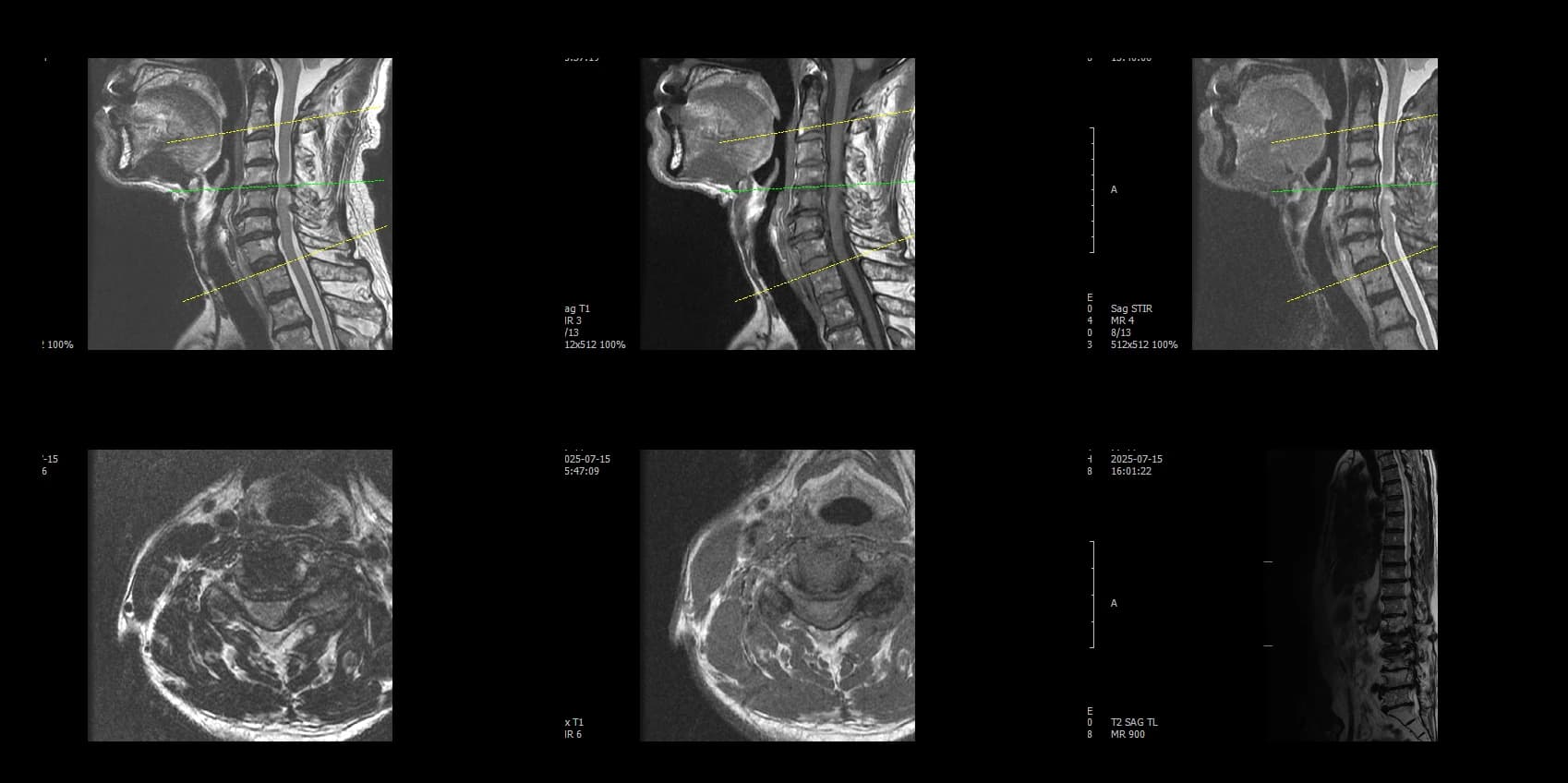
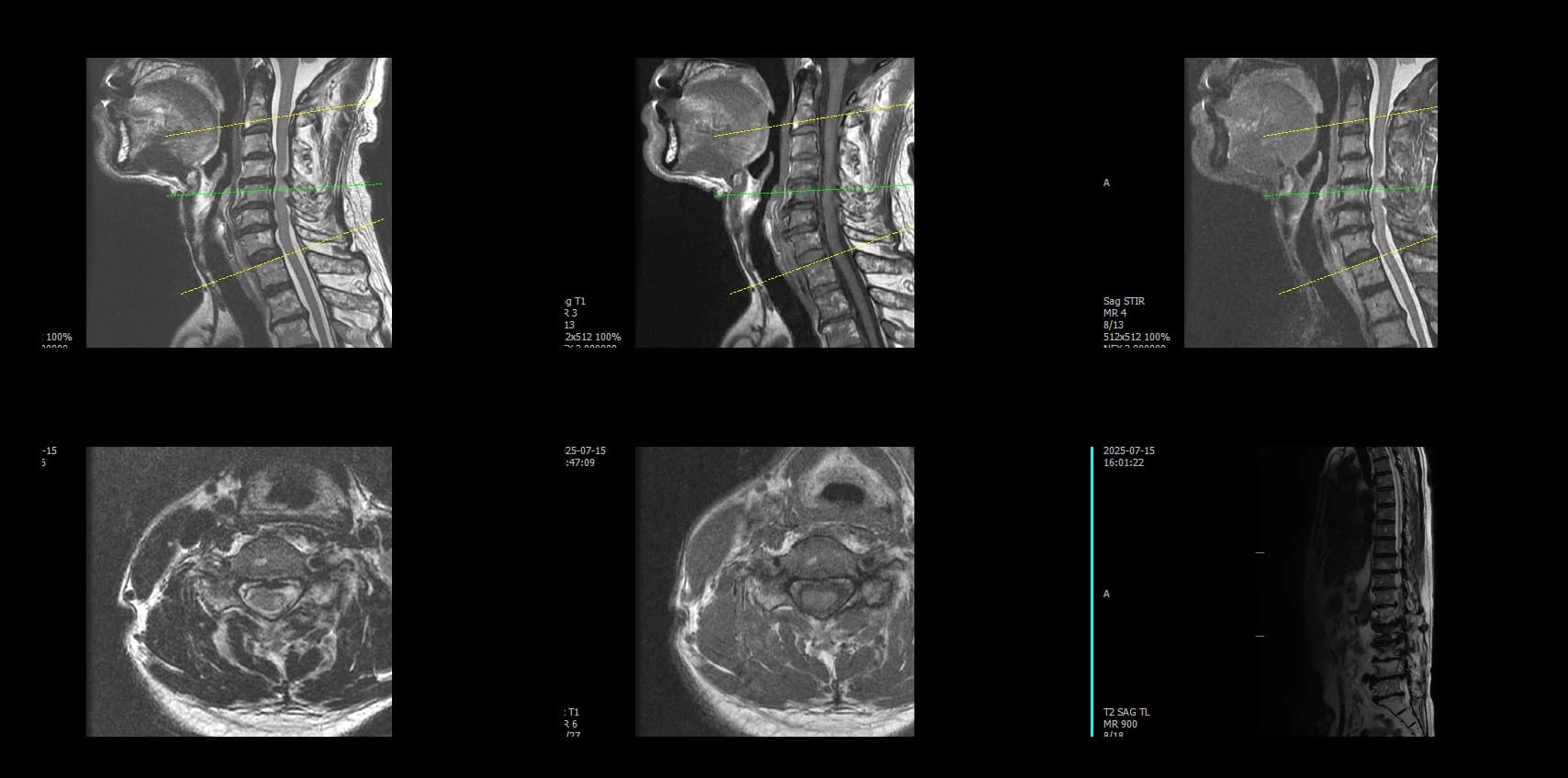
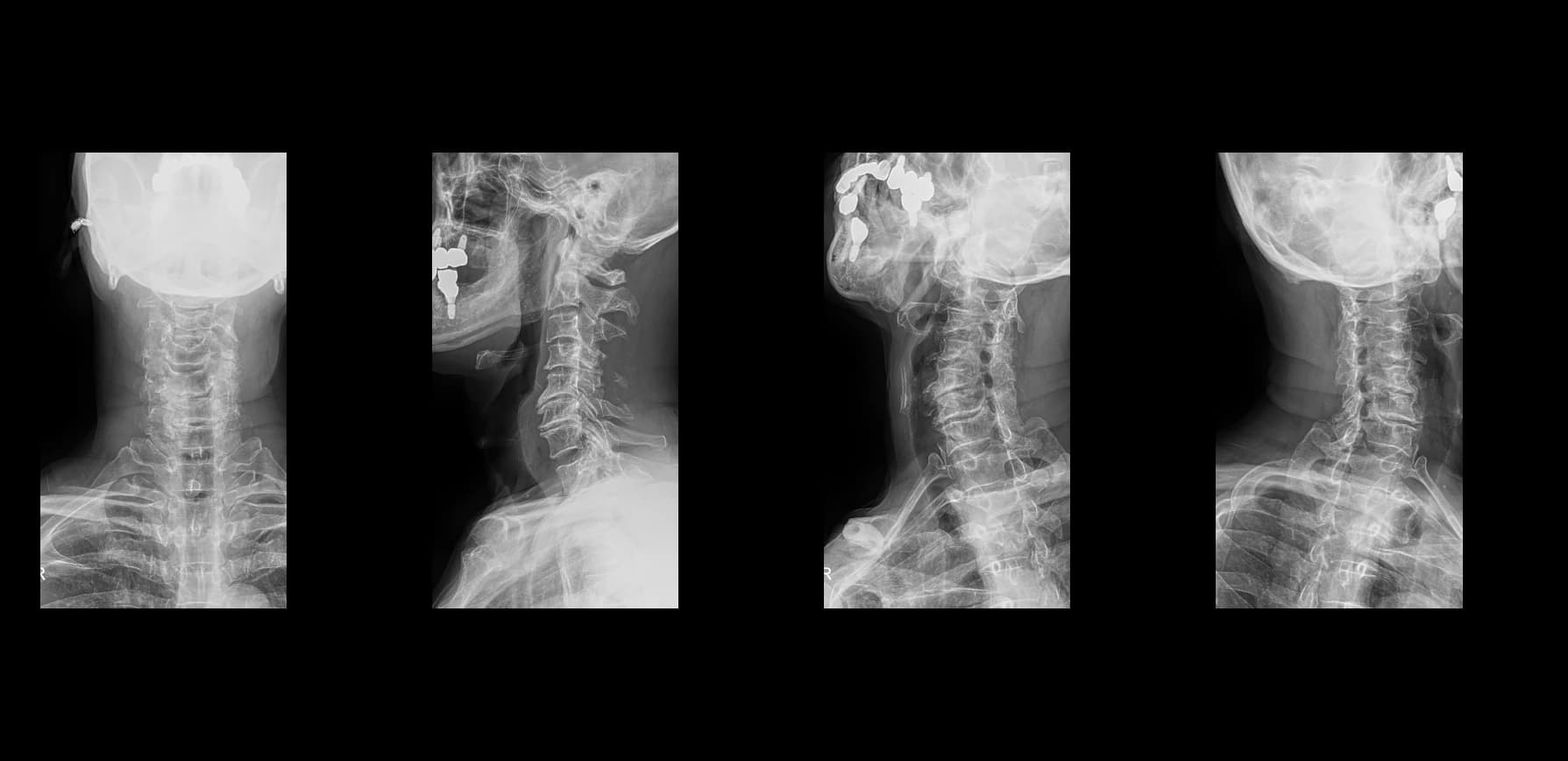
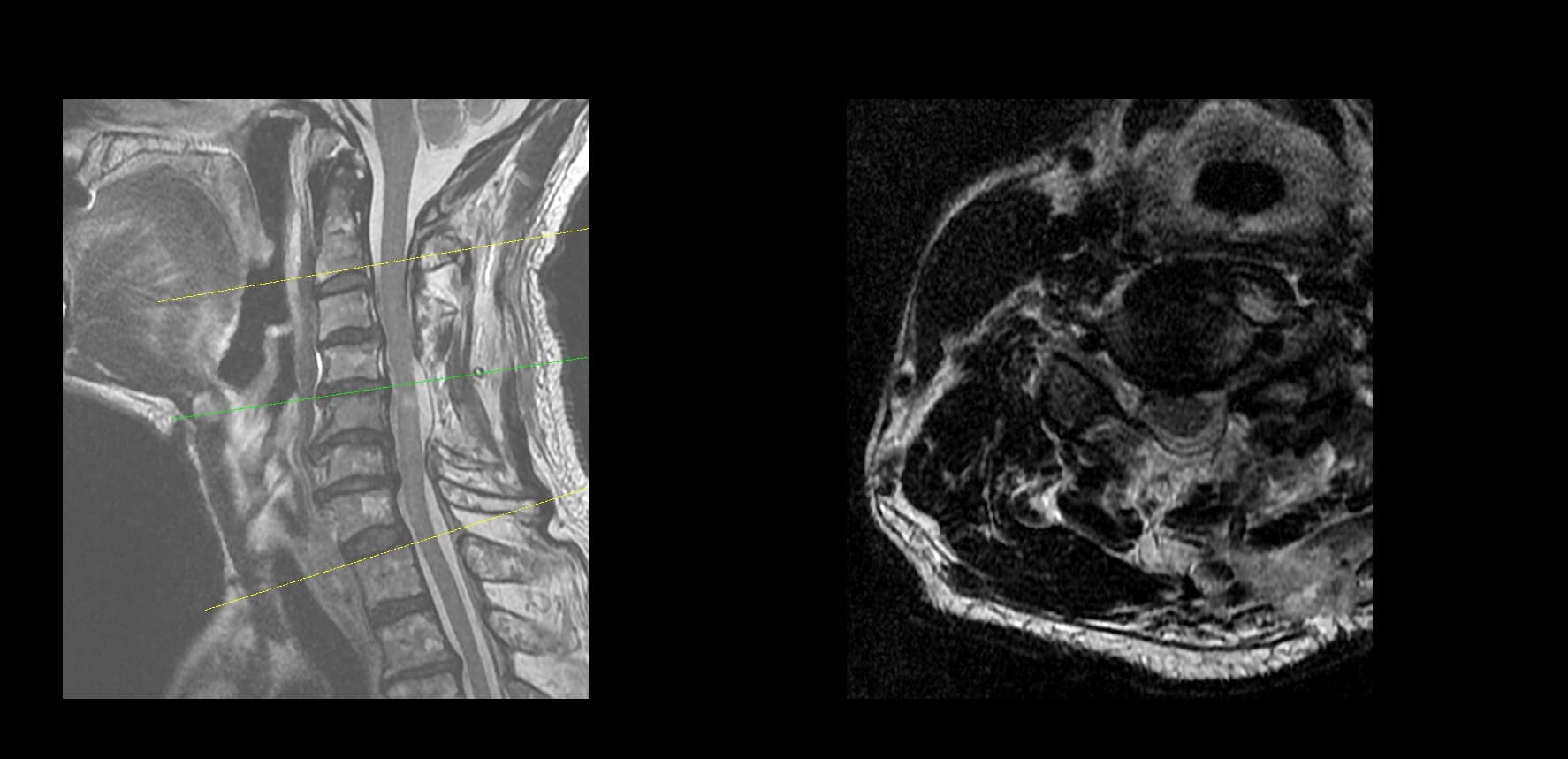
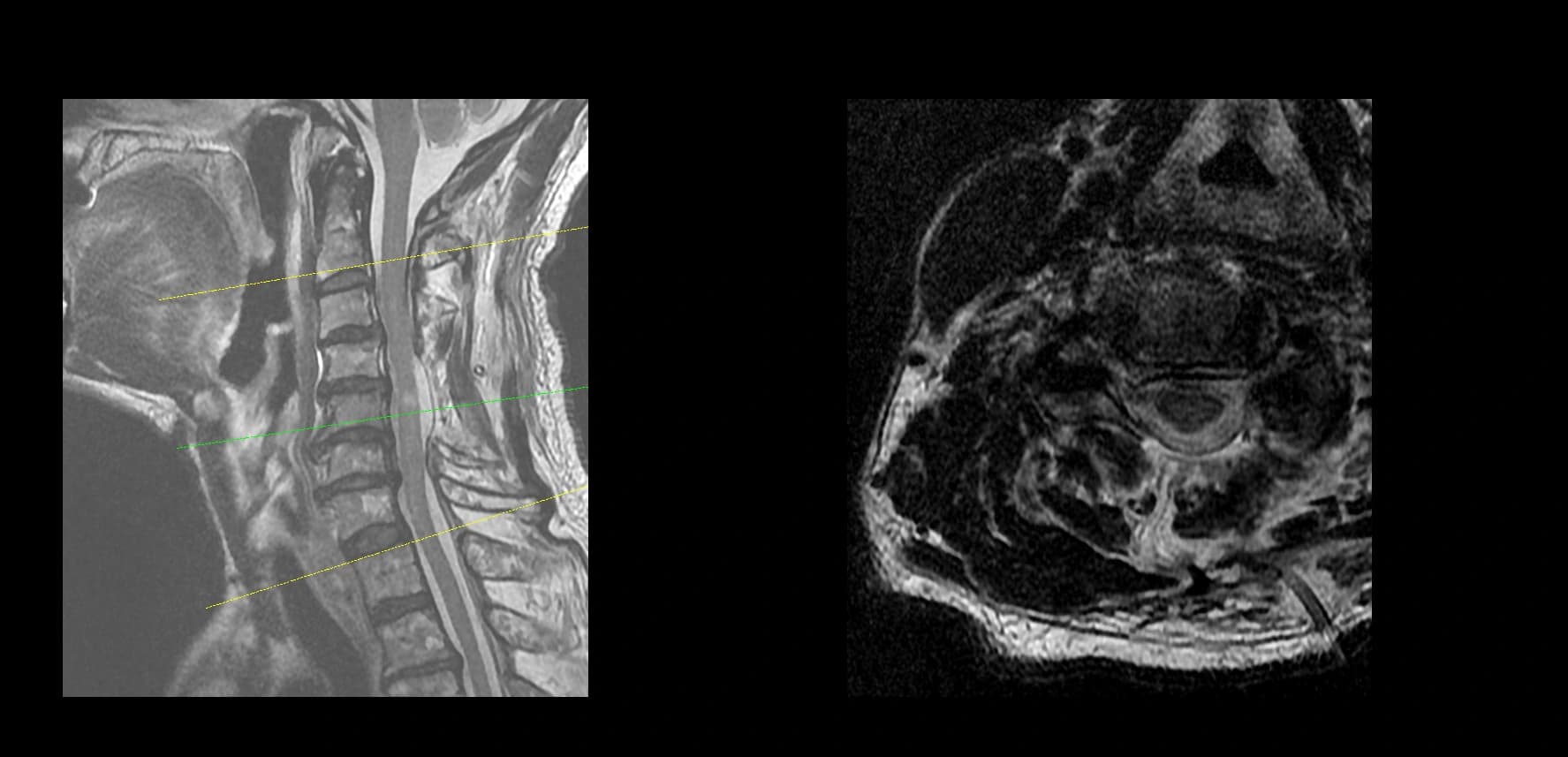
Preoperative cervical radiographs and MRI demonstrated multilevel cervical spondylotic stenosis at C4-C6. The MRI findings were reviewed for spinal cord compression and possible cord signal change in the context of cervical spondylotic myelopathy.
Surgical rationale
Endoscopic cervical decompression was considered because the patient had clinical features consistent with cervical myelopathy and imaging findings of multilevel cervical stenosis. The surgical objective was posterior decompression of the cervical spinal canal at the clinically concordant levels while preserving posterior stabilizing structures as appropriate.
Operative note summary
UBE cervical ULBD was performed at C4-5 and C5-6 through a left-sided approach. The operative workflow focused on controlled posterior decompression, identification of the laminar and ligamentous anatomy, protection of the dura and spinal cord, and bilateral decompression through a unilateral endoscopic corridor.
Operative time
Approximately 50 minutes.
Estimated blood loss
Approximately 100 mL.
Hospital stay
To be added after de-identification and editorial review.
Complications
To be added after de-identification and editorial review.
Postoperative course
To be added after de-identification and editorial review. If gait, balance, or neurologic findings improved after surgery, this should be described only as an observed course in this de-identified case and should not imply that similar recovery should be expected in other patients.
Postoperative imaging summary
Postoperative cervical MRI demonstrated decompression at the operated cervical levels. Imaging should be shown only after complete de-identification.
Educational point
This case illustrates the use of endoscopic posterior cervical decompression for multilevel cervical spondylotic myelopathy. In cervical myelopathy, the operative goal is not simply nerve-root decompression but adequate spinal cord decompression at the clinically concordant levels. During UBE cervical ULBD, careful orientation to laminar anatomy, ligamentous structures, the dura, and the spinal cord is essential. Because the cervical spinal cord is less tolerant of compression, traction, or instrument misdirection, controlled decompression and avoidance of blind instrument movement are critical technical considerations.

De-identified Clinical Images

Clinical History Summary

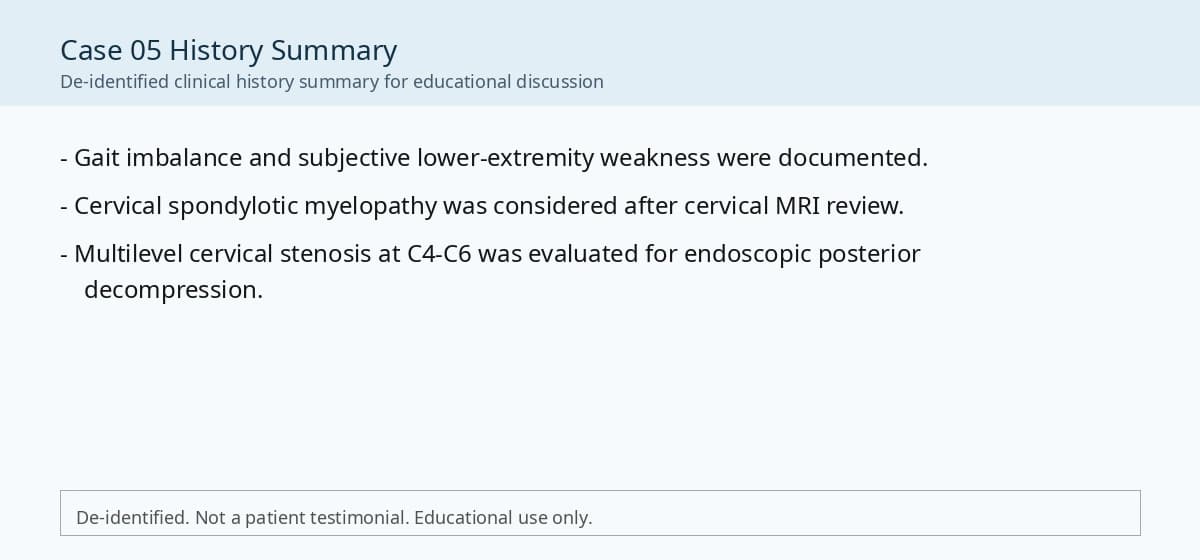
De-identified clinical history summary for cervical spondylotic myelopathy case.
De-identified clinical history summary for cervical spondylotic myelopathy.

Preoperative Images

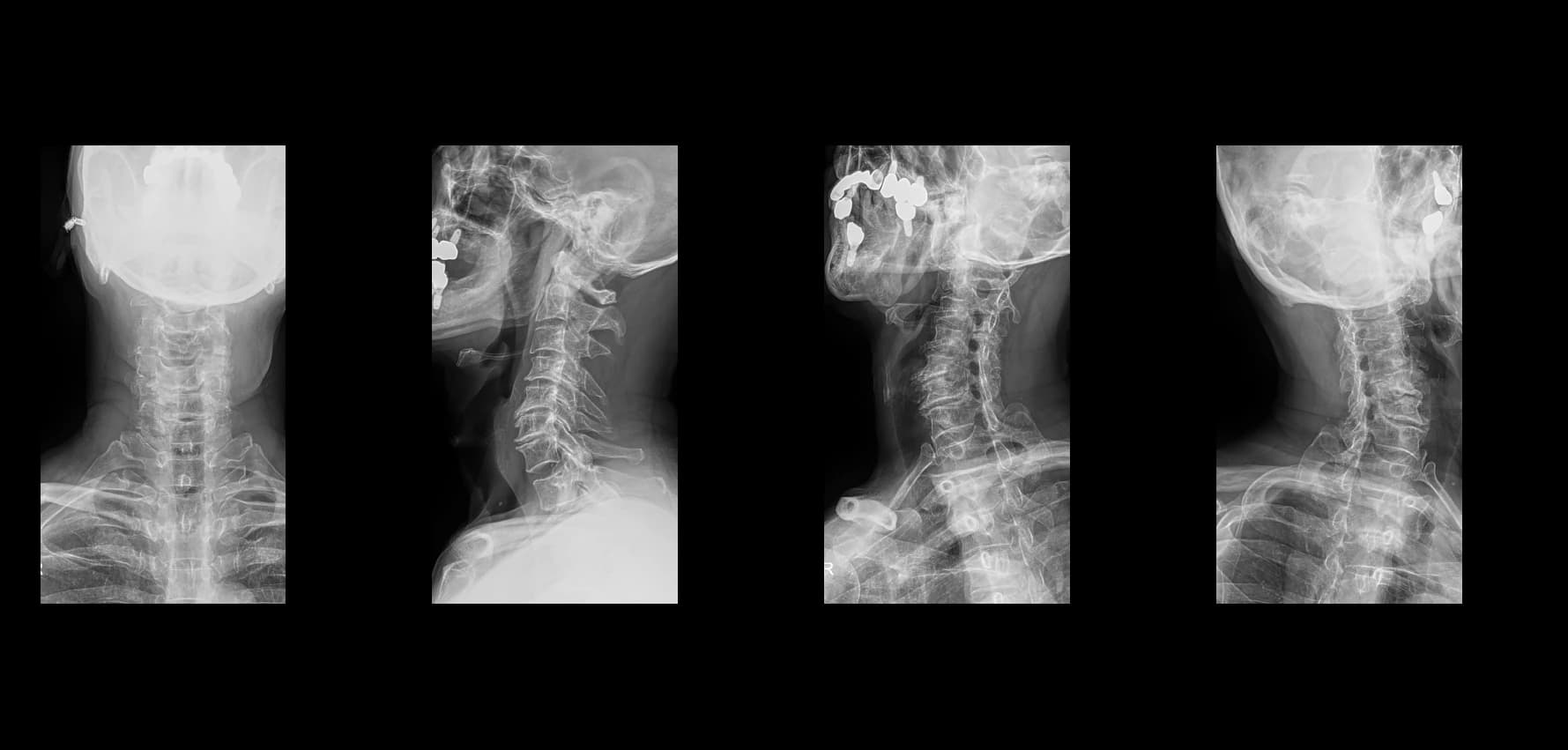
De-identified preoperative cervical radiograph for CSM case.
De-identified preoperative cervical radiograph used for alignment assessment.
De-identified preoperative sagittal cervical MRI demonstrating cervical stenosis.
De-identified preoperative sagittal cervical MRI demonstrating multilevel cervical stenosis.
De-identified preoperative axial cervical MRI demonstrating cervical stenosis.
De-identified preoperative axial cervical MRI demonstrating cervical canal stenosis.

Postoperative Images

De-identified postoperative cervical radiograph after endoscopic cervical decompression.
De-identified postoperative cervical radiograph after endoscopic decompression.
De-identified postoperative sagittal cervical MRI after endoscopic decompression.
De-identified postoperative axial cervical MRI after decompression.
De-identified postoperative axial cervical MRI after decompression at the operated level.

This case is presented for educational discussion only. It is de-identified and should not be interpreted as predicting a similar clinical course in another patient.